I’m bored of killing goblins.
There. I said it. I’ve been running tabletop games since the late 90s, and if I have to describe one more dank cavern or one more tavern brawl involving a hooded stranger, I might actually scream. We all know the drill. You meet at the inn, you get a quest, you kill things, you loot bodies. It works. It pays the bills for the big publishers.
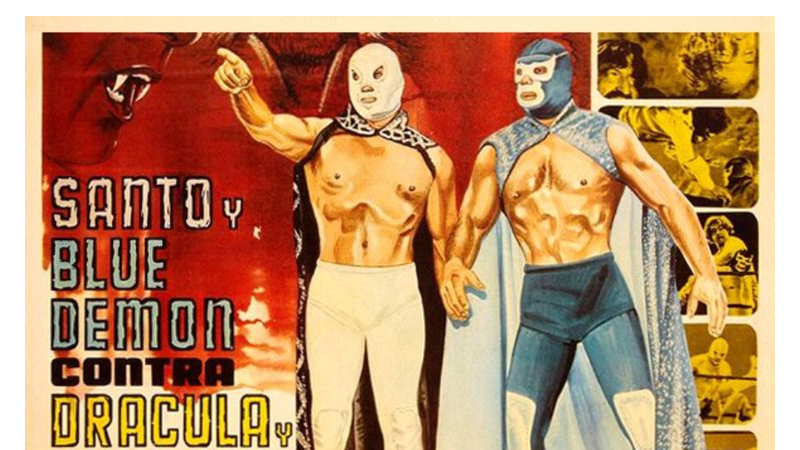
But lately? The stuff hitting my table isn’t about dragons. It’s about luchadores fighting eldritch abominations from beyond the stars.
I’m seeing a massive shift in the TTRPG space right now, specifically from the third-party and indie scene. We are moving away from “generic fantasy simulator” and sprinting full tilt toward what I call the “Gonzo Mash-up.” And honestly? It’s saving the hobby from stagnating. The big companies are too terrified of their shareholders to take risks, so it’s falling to the creators on itch.io and Kickstarter to ask the important questions. Questions like: “Can I put a Great Old One in a headlock?”
The answer, surprisingly, is yes. But only if the mechanics support it.
The Mechanics of the Absurd
Designing a game where you fight cosmic horror with professional wrestling moves sounds like a joke, right? Like a one-shot you play drunk and forget. But the technical design behind these mash-ups is actually sharper than most “serious” fantasy heartbreakers released in 2025.
Here’s the design problem: Horror relies on disempowerment. You are small; the monster is big. You can’t win; you can only survive. Wrestling, on the other hand, is about empowerment and performance. It’s about the “pop,” the crowd reaction, the physical domination of an opponent.
So how do you reconcile those two conflicting game loops?
I played a prototype recently that handled this brilliantly. Instead of a standard HP bar, the game used two tracking stats: Sanity and Heat.
- Sanity worked like your classic d100 investigation game. See something scary? Roll under your stat or lose your mind. Standard stuff.
- Heat was the wrestling mechanic. Every time you performed a move described in detail, you gained Heat.
The genius part? You could spend Sanity to auto-succeed on Heat checks. You are literally driving your character insane to perform a more impressive piledriver on a tentacle beast. That is ludonarrative harmony. The mechanics force you to roleplay the descent into madness not by cowering, but by becoming increasingly reckless and violent. It’s a distinct shift from the “attrition” model of D&D (where you just slowly lose resources) to a “push-your-luck” model that fits the genre mash-up perfectly.
Why Third-Party Creators Are Eating the Big Dogs’ Lunch
Let’s look at the market reality. The big publishers—you know who I mean—are stuck in a loop of releasing “Player Option Book #45” or “Adventure Path #12.” They can’t release a game about Cthulhu wrestling because their marketing department would have a stroke. It’s too niche. It’s too weird.
But the indie scene? They thrive on “too weird.”
I was looking at the crowdfunding numbers for late 2024 and 2025, and the trend is obvious. The massive, multi-million dollar campaigns for generic fantasy settings are cooling off. People have enough elves. Where the money is flowing—and more importantly, where the excitement is—is in these hyper-specific, high-concept zines and supplements.
It’s the “Long Tail” theory in action. There might only be 5,000 people on earth who desperately want a comic-book-style RPG about stopping the apocalypse with a steel chair, but those 5,000 people will buy everything you make. They will evangelize it. They will run it at conventions.
Plus, the production quality has skyrocketed. It used to be that “indie” meant a stapled Xerox pamphlet. Now? I’m holding third-party hardcovers that have better binding, better art direction, and better layout than the official rulebooks from the market leaders. The barrier to entry for professional layout software dropped to near zero a few years back, and we are finally seeing the results.
Running the Unrunnable
Okay, so you bought the weird book. You have the rules for grappling Shoggoths. How do you actually run this without the tone falling apart?
This is where a lot of GMs fail. They try to play it for laughs.
Don’t do that.
The secret to running a Gonzo RPG is to play it completely straight. If you wink at the camera, the tension evaporates. The horror needs to be real horror. The slime needs to be viscous and smelling of rot. The madness needs to be terrifying.
When the wrestler player decides to climb the turnbuckle (or a convenient altar) to drop an elbow on the monster, that shouldn’t be treated as a joke. It should be treated as a desperate, heroic act of violence against an uncaring universe.
The “Yes, And” Trap
There’s a risk here, though. In improv-heavy games, we’re taught to always say “Yes, and…” But in these genre-mashes, sometimes you have to say “No.”
If a player tries to suplex a cloud of sentient gas, the mechanics might technically allow it, but the fiction doesn’t. You have to be the arbiter of the world’s internal logic, even if that logic is bizarre.
My rule of thumb: The Physics of the Genre beats the Physics of Reality.
In a wrestling horror game, can you hurt a ghost? In reality, no. In a ghost story, no. In wrestling logic? If the crowd is cheering loud enough, you can punch anything. So, the mechanic becomes: Get the crowd (or the other players) cheering first, then punch the ghost.
The Future is Weird
I’m writing this on the last day of 2025, and looking forward to 2026, I don’t see this trend slowing down. The Open Game License fiascos of the past few years shattered the trust in monolithic systems. People realized they didn’t need permission to make games, and they didn’t need to stick to the d20 system.
We are seeing a resurgence of the “zine quest” mentality, but applied to professional productions. We’re seeing horror mixed with cozy farming sims. We’re seeing cyberpunk mixed with Regency romance. And yes, we are seeing wrestling mixed with cosmic horror.
It’s messy. It’s chaotic. A lot of these games are broken in fascinating ways. But I’d rather play a broken game that lets me pile-drive a Star Spawn than another perfectly balanced game about fighting rats in a basement.
So, support your local third-party weirdo. Buy the comic that doesn’t make sense. Back the RPG that sounds like a fever dream. That’s where the hobby is actually living right now. Everything else is just maintenance mode.