



I looked down at my desk yesterday and realized something that would have horrified me three years ago. My heavy, custom-built aluminum keyboard—the one with the hand-lubed tactile switches, the brass plate, and the GMK keycaps that cost more than my CPU—was sitting on a shelf. In its place, right under my hands, was a plastic Hall-effect board that doesn’t sound half as good but makes me play twice as well.
It’s late December, and I’ve spent the better part of 2025 testing just about every major release in the Gaming Keyboards space. If you had asked me back in 2023, I would have told you that magnetic switches were a niche gimmick for rhythm game players. But sitting here now, I have to admit that the war is over. If you care about competitive performance in titles like Valorant or Counter-Strike, the traditional mechanical switch is effectively obsolete.
That might sound harsh, especially to the die-hard enthusiasts in the Gaming Community who live for the “thock,” but the tech has moved too fast to ignore. Here is my breakdown of where we stand right now, why I think Hall-effect (HE) has completely taken over, and where the few remaining holdouts for mechanical switches still exist.
The Hall-Effect Standard: It’s Not Just Hype Anymore
Let’s get the technical stuff out of the way. For years, we relied on physical contacts—metal leaves touching each other to send a signal. It worked, but it was static. You pressed a key, it actuated at 2mm, and that was it.
The shift to Hall-effect sensors, which use magnets to detect key depth, isn’t new, but 2025 was the year it became the baseline requirement for Gaming Tech. I refuse to recommend a keyboard for FPS gaming today if it doesn’t support Rapid Trigger. The ability to reset a keypress the instant you lift your finger—rather than waiting for the switch to pass a fixed reset point—changes how movement feels entirely.
I’ve been grinding ranked matches in Apex Legends and the difference is night and day. Counter-strafing feels instantaneous. When I go back to a standard mechanical board, my movement feels muddy, like I’m playing with high latency. It’s not placebo; it’s physics.
But here is the thing that annoyed me earlier this year: the SOCD (Simultaneous Opposing Cardinal Directions) controversy. We saw manufacturers rushing to implement “Snap Tap” or similar features that prioritize the last input. While some developers pushed back, the hardware capability is here to stay. I use it. I don’t feel guilty about it. If the hardware allows me to strafe cleaner by prioritizing my ‘A’ key over my ‘D’ key without fully releasing the first one, I’m taking that advantage.
The Acoustics Problem: Where HE Still Falls Short
Here is where my heart breaks a little. I love the sound of a well-tuned mechanical keyboard. I love the specific clack of a long-pole linear switch hitting a polycarbonate plate. Magnetic switches? They have improved, but they still lag behind in the sound department.
Most HE switches are naturally wobbly. The stem design has to accommodate the magnet, and for a long time, the tolerances were loose. Earlier this year, we started seeing “dual-rail” magnetic switches that stabilized the key wobble significantly. I’ve been testing a few boards with these newer Gateron magnetic implementations, and they are getting closer to that premium feel.
However, if you are typing a 2,000-word essay, I still swap back to my custom mechanical board. The typing experience on a magnetic board can feel a bit hollow. The bottom-out feel is often harsh because there are no pins to dampen the impact, just a stem hitting the bottom housing. Manufacturers are stuffing these boards with silicone, poron foam, and tape mods right out of the factory to compensate. It helps, but it doesn’t fix the core physics of the switch structure.
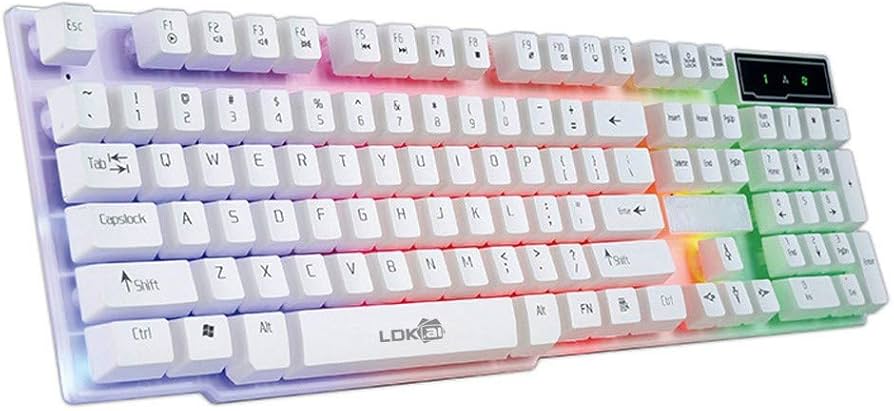
If you are strictly a typist or play slower-paced RPG Games or Strategy Games, you do not need HE. Stick to the high-end mechanicals. They sound better, feel better, and offer way more customization options for springs and tactile bumps.
The 75% Layout is the New King
I am officially done with full-sized keyboards. I haven’t had a Numpad on my desk in two years, and I don’t miss it. But I also got tired of the 60% life. Relying on function layers just to hit an arrow key or F5 was driving me crazy during work hours.
The trend I’ve seen solidify throughout 2025 is the dominance of the 75% layout. It keeps the F-row, gives you dedicated arrow keys, and usually keeps the navigation cluster (Delete, Page Up/Down), but it still leaves plenty of room for mouse movement. For Gaming Mice enthusiasts who play on low sensitivity, that extra desk real estate is critical.
What I find interesting is how manufacturers are using that extra space in the top right corner. We’ve moved past the simple volume knob. Now, almost every “flagship” board has a small OLED or LCD screen. Honestly? I think it’s mostly a gimmick. I don’t need to see a GIF of a dancing cat on my keyboard while I’m trying to clutch a round in Valorant. However, being able to adjust actuation points or check battery life without Alt-Tabing into software is actually useful.
Software: The Silent Killer
This is where I get frustrated. You can have the best hardware in the world, but if your software requires a 500MB download and runs six background processes just to keep my RGB lighting on, I hate it. I’m looking at you, legacy brands.
The reason smaller enthusiast brands are eating the lunch of the big corporate giants is web-based configuration. I plug in my board, go to a website, change my Rapid Trigger sensitivity from 0.15mm to 0.1mm, and close the tab. No bloatware. No “please create an account to use your driver.”
I’ve tested a few mainstream Gaming Peripherals this month that still force you to install heavy suites. It causes friction. In 2025, if your keyboard doesn’t have onboard memory that saves 100% of the settings (including complex remaps), it’s a failure in my book. I take my gear to LANs or friends’ houses; I don’t want to install your software on their PC just to make my caps-lock key function as a push-to-talk.
Budget vs. Premium: The Gap Has Closed
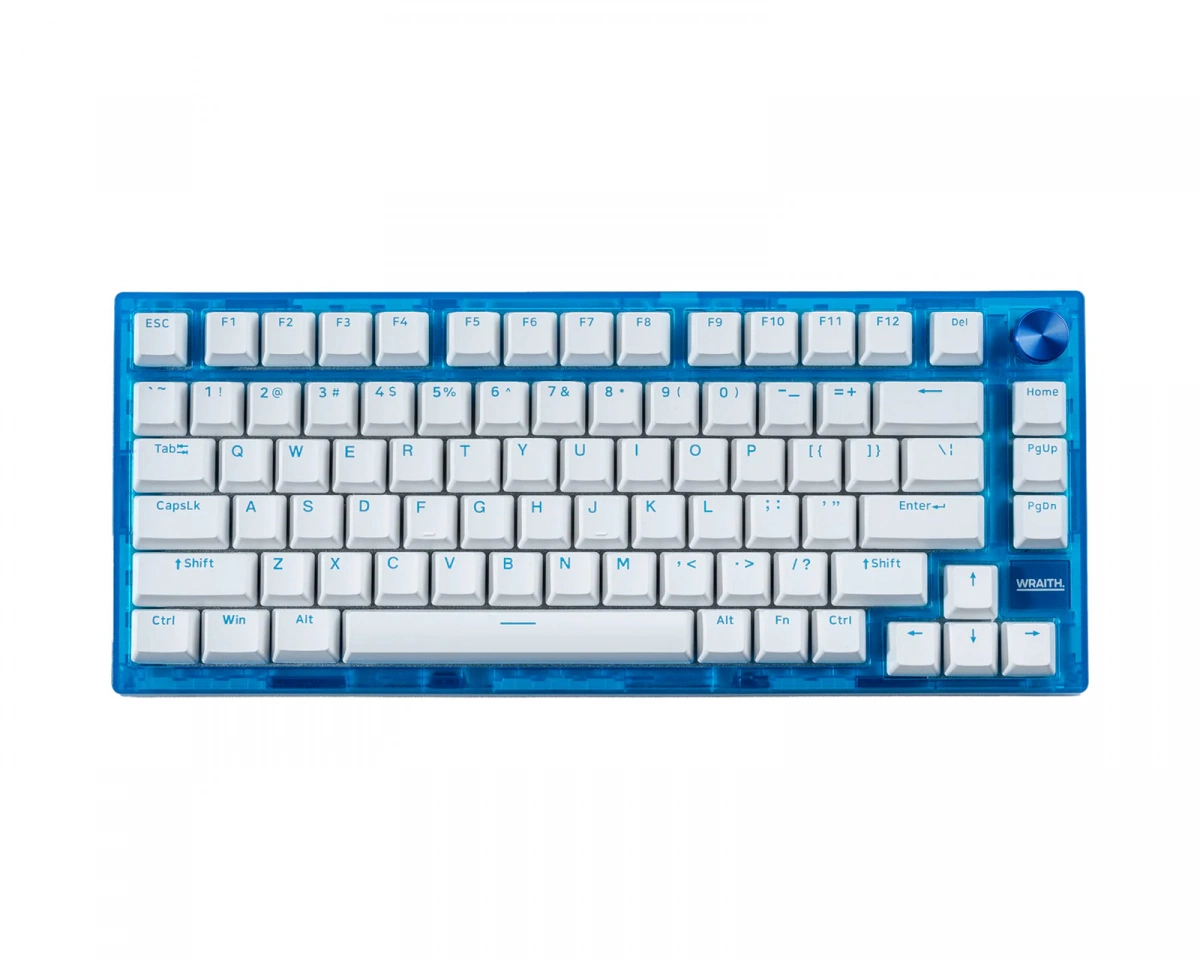
Two years ago, if you wanted a good Hall-effect keyboard, you had to spend nearly $200. Today, I have three boards on my shelf that cost under $100 and perform 95% as well as the flagships. The democratization of magnetic tech has been the best thing for PC Gaming.
The budget sector is fierce. You can find boards with 8,000Hz polling rates and fully adjustable actuation for the price of a standard mechanical board. The plastic might feel a bit cheaper, and the stabilizers might rattle a bit more, but the raw performance is there. This puts massive pressure on the premium sector. If I’m paying $200+ in late 2025, that case better be CNC aluminum, the acoustics better be perfect, and the wireless performance better be flawless.
I’ve noticed a lot of people in the Gaming Community asking if they need to upgrade from their 2022 or 2023 mechanical boards. My answer is usually: only if you play competitively. If you are casually enjoying Minecraft News updates or playing Indie Games, your current mechanical switch board is fine. Better than fine, actually—it probably feels better to type on.
Wireless is Finally Viable for Competitive Play
For a long time, “wireless” and “competitive keyboard” didn’t go together. We trusted wireless mice, but keyboards were lagging behind, mostly due to battery drain from high polling rates. That changed this year. I’ve been running a 2.4GHz wireless HE board for the last three months, and I haven’t noticed a single drop or latency spike.
The freedom of a wireless setup is underrated. I like to tilt my keyboard at an aggressive angle when I play FPS games, but straighten it out when I type. Not having a cable dragging across my desk makes that constant adjustment seamless. Battery life is still the bottleneck—especially with RGB on—but fast charging via USB-C makes it manageable. I just plug it in when I go to sleep once a week.
The Rise of Optical Switches (The Forgotten Sibling)
While magnets get all the glory, I want to touch on optical switches. They had a moment, but I feel like they are fading. They offer the speed and durability, but they lack the granular adjustability of Hall-effect. With an optical switch, the beam is either broken or it isn’t. You can’t really do the analog sensing required for true Rapid Trigger unless you have complex analog optical sensors, which are rare and expensive.
I have a few optical boards in my collection. They are smooth, incredibly smooth actually, because there is no physical contact leaf. But without the ability to customize the actuation point on the fly, they feel like a half-step. In the current market, I see optical as a durable option for internet cafes or public stations, but for the home enthusiast, magnetic is the clear winner.
My Ideal Setup for 2026
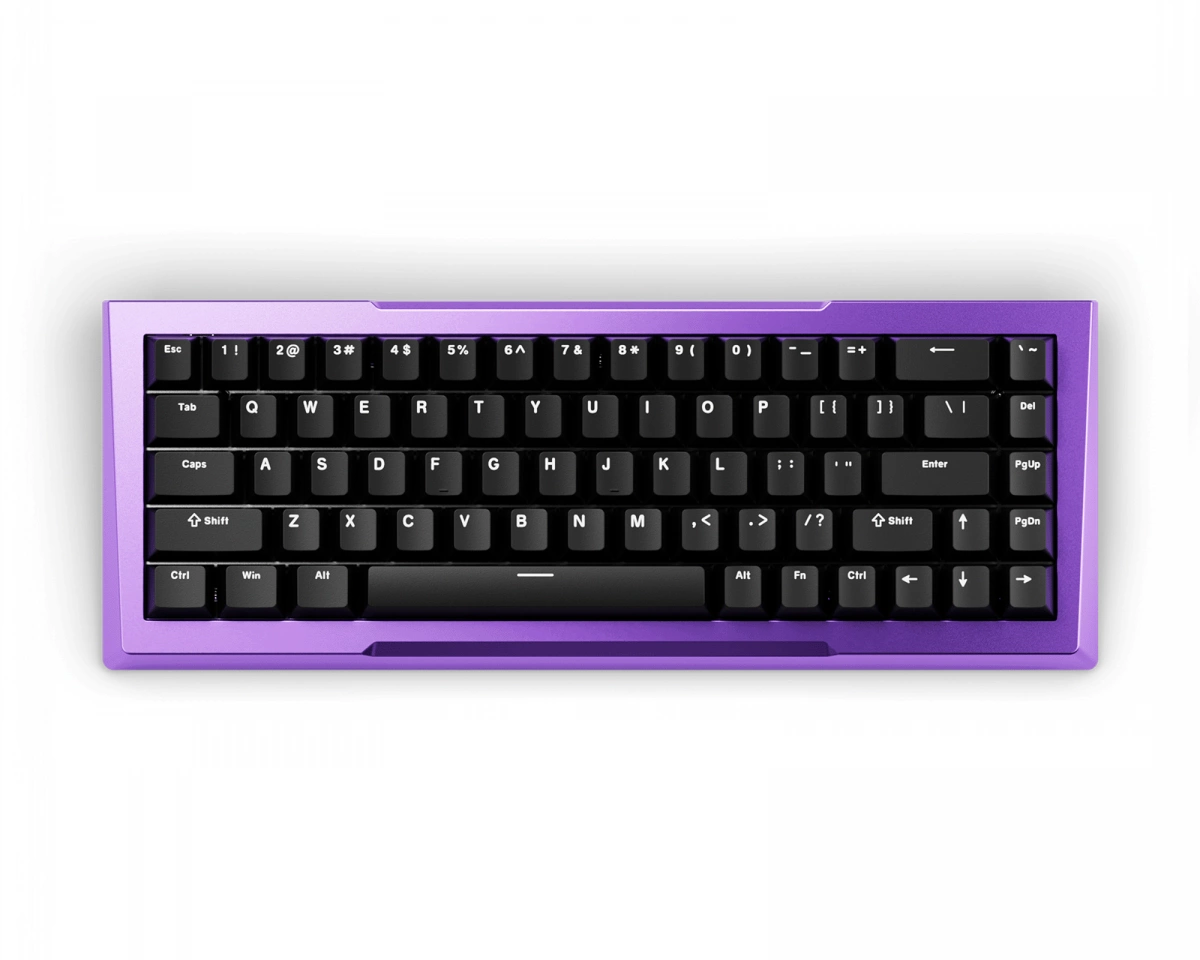
As we head into the new year, here is what I am looking for in my “endgame” board (if such a thing exists). I want a 75% layout in a heavy aluminum case. I want magnetic switches, but with the acoustic tuning of a custom mechanical. I want a web-based configurator, 8k polling, and a battery that lasts a month.
We aren’t quite there on the acoustics yet. That is the final frontier. Manufacturers are experimenting with different materials for the switch stems—POM, LY, POK—trying to find that perfect sound signature that doesn’t sacrifice magnetic flux accuracy. I’ve seen some prototypes using gasket mounts specifically designed for HE PCBs, which helps soften the typing feel.
If you are looking to buy right now, look at the polling rate and the software. Don’t get tricked by “8K Hz” marketing if the switch processing latency is high. Look for reviews that test actual end-to-end latency. And seriously, check if it has a web driver. It saves so much headache.
The Verdict
I miss my mechanical switches. I miss the tactility of a Holy Panda or the smooth clack of a vintage Black. But I don’t miss losing gunfights because my key didn’t reset fast enough. The gaming keyboard market has bifurcated. We now have “Typing Instruments” and “Gaming Peripherals.” They are no longer the same product category.
If you play to win, you get magnets. If you play to relax, you keep your mechanicals. I keep both on my desk now. It’s a bit cluttered, and my wallet hates me, but it’s the only way to get the best of both worlds. The tech we have available today is incredible compared to five years ago, and frankly, we are running out of excuses for being bad at games. It’s not the hardware anymore; it’s us.