
Introduction: The New Standard for Battlestations
In the high-octane world of Competitive Gaming, the margin between victory and defeat is often measured in milliseconds. For decades, the mechanical switch was the gold standard for Gaming Keyboards, offering tactile feedback and durability that membrane boards simply could not match. However, as Esports News headlines continue to highlight broken records and increasingly skilled gameplay, the hardware industry has hit a pivot point. We are no longer just looking for “clicky” keys; we are entering an era of analog precision, magnetic actuation, and speed that defies human perception.
The latest wave of Gaming Hardware is shedding the constraints of physical metal contacts in favor of Hall Effect technology and magnetic sensors. This shift isn’t merely a marketing gimmick found in Gaming Tech brochures; it represents a fundamental change in how players interact with their virtual environments. From FPS Games like Counter-Strike 2 and Valorant to fast-paced Battle Royale titles, the input device is evolving from a simple typewriter descendant into a highly calibrated instrument of war. As we look at the trajectory of PC Gaming, it becomes clear that the future of peripherals lies in tunability, raw speed, and premium build quality that rivals custom enthusiast boards.
Section 1: Beyond Mechanical – The Rise of Magnetic Switches
The Limitations of Traditional Contacts
To understand why the industry is shifting, we must first look at the legacy technology. Traditional mechanical switches, which have dominated Gaming Culture for years, operate on a simple premise: a plastic stem pushes two metal contacts together to complete a circuit. While reliable, this design has physical limitations. There is a fixed actuation point (usually 2mm) and a fixed reset point. This creates a phenomenon known as “debounce delay,” where the firmware must wait to ensure a signal is stable before registering a press.
In the realm of Game Development, input latency is the enemy. Whether you are executing a frame-perfect combo in Fighting Games or counter-strafing in a tactical shooter, waiting for a physical leaf spring to reset can feel like an eternity. This is where the new generation of magnetic switches enters the conversation.
Hall Effect Technology Explained
The “future” of keyboards utilizes the Hall Effect. Instead of physical contacts touching, a magnet is embedded in the switch stem. A sensor on the PCB (Printed Circuit Board) detects the magnetic field’s strength as the key is pressed. This allows the keyboard to know the exact position of the key at all times, from 0.1mm to 4.0mm.
This analog sensing capability unlocks features that were previously impossible. It eliminates contact bounce, drastically reducing latency. For enthusiasts following Gaming News, this technology is the bridge between intention and action. It allows for a level of responsiveness that standard mechanical switches physically cannot achieve, making it a critical upgrade for anyone serious about Competitive Gaming.
Durability and Feel
Another advantage of magnetic switches is durability. Without physical metal leaves making contact and rubbing against each other, friction is reduced, and the lifespan of the switch increases—often rated for over 100 million presses. This is vital for MOBA Games like League of Legends or Dota 2, where APM (Actions Per Minute) can be incredibly high. Furthermore, because the mechanism is contactless, the typing feel is often smoother, appealing to those who use their Gaming PCs for both work and play.
Section 2: Speed, Precision, and the “Cheating” Debate
Rapid Trigger: The Game Changer
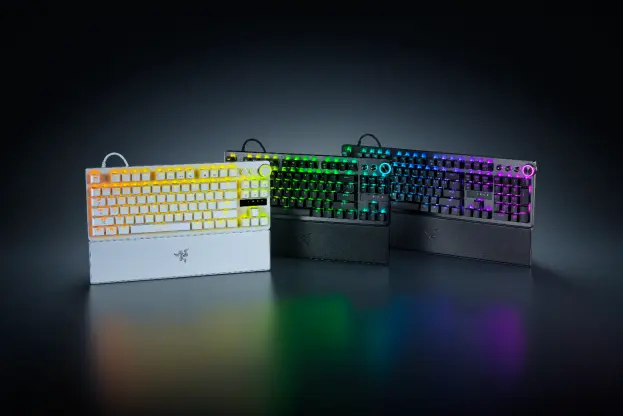
The most significant breakthrough in recent Gaming Peripherals is a feature commonly known as “Rapid Trigger.” Because a magnetic keyboard knows the key’s exact depth, it doesn’t need to pass a fixed reset point to deactivate. Instead, the key can reset the moment you lift your finger, even by as little as 0.1mm. Conversely, it can reactivate the moment you press down again.
Real-World Scenario: Imagine playing Valorant News-worthy matches. You are peeking a corner. With a traditional keyboard, to stop moving and fire accurately, you must release the ‘A’ key and wait for it to travel up past the reset point. With Rapid Trigger set to 0.01mm sensitivity, the moment your finger creates the slightest upward micro-movement, your character stops instantly. This grants a distinct mechanical advantage in stopping power and accuracy.
8K Polling and Ultra-Low Latency
Speed isn’t just about the switch; it’s about communication with the computer. Standard keyboards poll at 1000Hz (sending data once every millisecond). The new flagship standard is 8000Hz (8K), sending data every 0.125ms. When paired with high-refresh-rate Gaming Monitors (360Hz or 540Hz), this reduces the total system latency chain.
While the diminishing returns of 8K polling are debated in Tech Reviews, for the top 1% of players in Esports News, minimizing the bottleneck between the hand and the engine is worth the processing power. It ensures that the keyboard is never the reason a shot was missed.
SOCD and Advanced Software Features
The analog nature of these boards allows for advanced software manipulation, such as SOCD (Simultaneous Opposing Cardinal Directions), sometimes branded as “Snap Tap” or similar technologies. This feature prioritizes the most recent key press when two opposing keys (like A and D) are held down. In Overwatch News or Apex Legends News, this allows for near-instant direction changes without the user needing to perfectly time the release of the previous key.
This has sparked controversy in the Gaming Community regarding competitive integrity. Some argue it lowers the skill ceiling, while others view it as the natural evolution of Gaming Tech. Regardless of the stance, it is a feature that defines the current cutting edge of keyboard performance.
Section 3: Build Quality, Aesthetics, and Ecosystem
The Premium Shift: Metal and Glass
Gone are the days when “gamer gear” meant cheap, rattling plastic with aggressive red accents. The influence of the custom mechanical keyboard hobby has bled into the mainstream gaming market. Modern flagship Gaming Keyboards now feature full CNC aluminum cases, heavy brass weights, and gasket-mounted internal structures. This provides a solid, dense feel that improves acoustics and stability.
Aesthetics have also matured. We are seeing the integration of tempered glass elements, sophisticated light bars, and high-quality PBT keycaps. Whether you are building a setup for Game Streaming on Twitch or just want a clean desk for working from home, these devices are designed to be centerpieces. The visual appeal is now on par with high-end Graphics Cards or premium Gaming Cases.
Acoustics and “Thock”
Sound is a major component of the typing experience. Manufacturers are now pre-installing sound-dampening foams (PORON, IXPE) and lubricating switches at the factory. This pursuit of the perfect sound—often described as “thocky” or “creamy” in Gaming Culture—ensures that the keyboard sounds as premium as it performs. This attention to detail was previously reserved for niche hobbyists but is now expected in flagship Gaming Peripherals.
Cross-Platform Compatibility
While primarily aimed at PC Gaming, these high-performance boards are increasingly compatible with Console Gaming setups. With the rise of 120Hz support on consoles covered in PlayStation News and Xbox News, console players using mouse and keyboard adapters or native support are also seeking the advantages of Rapid Trigger and magnetic switches. Even Mobile Gaming enthusiasts using docking stations are beginning to adopt high-end peripherals to mimic the desktop experience.
Section 4: Is the Upgrade Worth It? Pros, Cons, and Considerations
Who Needs This Technology?
The transition to magnetic, high-polling keyboards is most beneficial for players of FPS Games (First-Person Shooters) and Rhythm Games (like Osu!). In these genres, timing windows are strict, and the benefits of Rapid Trigger are tangible. If you primarily play RPG Games, Strategy Games, or MMORPG News titles like World of Warcraft, the ultra-low latency might be less noticeable compared to the need for macro keys or ergonomic comfort.
The Price of Performance

Innovation comes at a cost. These “future-ready” keyboards often carry a flagship price tag, competing with other high-ticket items like Gaming Chairs or mid-range Gaming Headsets. However, for the competitive player, the return on investment is the removal of hardware limitations. It is similar to upgrading from a 60Hz monitor to a 240Hz monitor; once you experience the fluidity, it is difficult to go back.
Software Dependency
One potential downside is the reliance on software. To configure actuation points, RGB lighting, and rapid trigger sensitivity, users must navigate proprietary software. Game Reviews often cite bloated software as a negative, so looking for keyboards with onboard memory (where settings are saved to the device) is a best practice. This ensures that whether you are at a LAN tournament or switching between Gaming Laptops, your settings remain consistent.
The “Skill Gap” Reality
It is important to note that while better gear removes bottlenecks, it does not replace skill. A magnetic keyboard will not teach you game sense in Call of Duty News or map awareness in League of Legends News. It simply ensures that your physical inputs are translated into the game engine with the highest possible fidelity. It is a tool for the dedicated, not a magic wand for the casual.
Conclusion
The landscape of Gaming Keyboards is undergoing its most significant transformation since the mechanical switch resurgence of the early 2010s. The convergence of Hall Effect sensors, 8K polling rates, and sophisticated processing algorithms has created a new tier of “super-peripherals.” These devices are no longer passive inputs; they are active components in the Gaming Industry‘s pursuit of perfection.
For the enthusiast following Video Games and hardware trends, the message is clear: the future is magnetic, adjustable, and incredibly fast. Whether you are grinding ranks in Counter-Strike News, exploring the latest Indie Games, or simply appreciate fine engineering, the new generation of keyboards offers a blend of luxury and performance that transforms the battlestation into a true arena. As we look toward upcoming Game Releases utilizing engines like Unreal Engine 5, having hardware that can keep up with increasing visual and gameplay fidelity is more important than ever. The weapon of the future is here, and it is waiting at your fingertips.