
Introduction
The landscape of interactive entertainment has undergone a seismic shift over the last two decades. What was once a solitary hobby or a localized social activity restricted to living rooms has exploded into a global, interconnected phenomenon. The Gaming Community is no longer just a group of people playing Video Games; it is a complex ecosystem comprised of developers, content creators, competitive athletes, hardware enthusiasts, and casual players. Today, the concept of “community” in gaming drives the industry forward, influencing Game Development, dictating market trends, and even establishing new economic models through reward pools and digital ownership.
As we navigate the current era of Gaming News, we see a convergence of traditional gameplay loops with modern connectivity. Whether it is a squad teaming up in Battle Royale titles or strategy enthusiasts dissecting the mechanics of RPG Games, the social fabric of gaming is tighter than ever. This article explores the intricate layers of the modern gaming community, examining how featured hubs, community rewards, and the diversification of genres—from Indie Games to AAA Games—are reshaping how we play, interact, and value our digital leisure time.
Section 1: The Anatomy of Modern Gaming Communities
The Shift from Passive Consumption to Active Participation
Historically, the relationship between a game studio and a player was linear: the studio produced the game, and the gamer consumed it. Today, that line is blurred. Platforms like Steam News and Epic Games News frequently highlight titles that are in “Early Access,” a model that relies entirely on community feedback to shape the final product. Game Design is now a collaborative effort. Communities formed around engines like Unity News and Unreal Engine News are not just playing; they are modding, critiquing, and sometimes rebuilding games from the ground up through Game Mods.
This participatory culture is most evident in the realm of PC Gaming, where the open nature of the platform allows for deep customization. However, Console Gaming is catching up. With cross-play becoming a standard expectation for PlayStation News, Xbox News, and even Nintendo News, the barriers between distinct player bases are eroding. A player on a high-end Gaming PC can now seamlessly interact with a friend on a console, creating a unified community that transcends hardware limitations.
The Rise of Gaming Hubs and Aggregators
A recent trend in the Gaming Industry is the centralization of player activities into “hubs.” These are not just store fronts but social ecosystems. In these spaces, players can discover new titles—often hidden gems in the Indie Games sector—and participate in curated events. These hubs often feature specific genres, such as Strategy Games or idle/turn-based RPGs, creating a “comfort zone” for players who prefer tactical depth over twitch reflexes.
Crucially, these hubs are increasingly introducing incentive layers. We are seeing the emergence of community reward pools, where testing a featured game or achieving specific milestones can yield tangible rewards. This gamification of the platform itself encourages players to step outside their usual rotation of games and experiment with new mechanics, fostering a culture of discovery and mutual benefit between developers and the player base.
The Role of Streaming and Content Creation
No discussion of community is complete without acknowledging Twitch News and the influence of Game Streaming. Streamers serve as the town criers of the digital age. When a major personality picks up a new title, be it a Retro Gaming classic or a cutting-edge release, thousands of players flock to try it. This creates micro-communities within the larger ecosystem. For example, the Minecraft News cycle is often driven by content creators showcasing new builds or mods, keeping a decade-old game perpetually fresh.
Section 2: Genre Dynamics and The “Comfort Zone” of Play
The Strategic Depth of RPGs and Turn-Based Tactics
While high-octane shooters dominate the headlines, a massive, dedicated portion of the community thrives in the realm of RPG Games and turn-based tactics. These genres offer a different kind of engagement—one that is cerebral and deliberate. For many, this is their “comfort zone.” Games that utilize grid-based movement or complex class systems require players to study Game Mechanics deeply.
Communities surrounding these titles are often less toxic and more collaborative than their competitive counterparts. Forums and Discord servers are filled with players sharing tutorials, optimizing builds, and discussing lore. The recent resurgence of tactical RPGs demonstrates that there is a hunger for games that respect the player’s time and intelligence. When a gaming hub features such a title, it often provides tutorials or “quick look” videos, acknowledging that the learning curve is part of the fun. The satisfaction comes not from reaction time, but from planning and execution.
The Competitive Cauldron: Esports and FPS
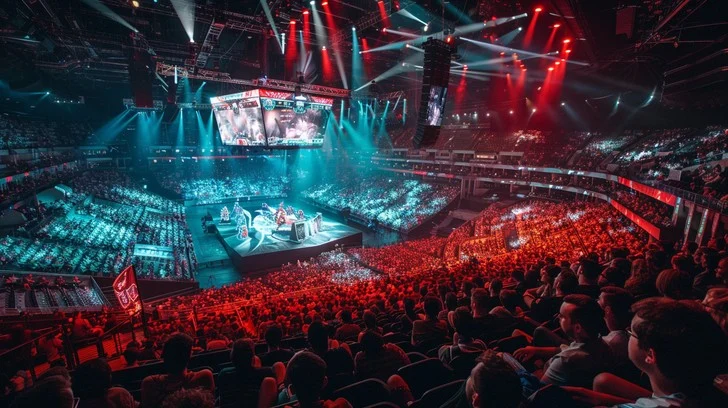
On the other end of the spectrum lies Esports News and the adrenaline-fueled world of FPS Games and MOBA Games. Titles like Counter-Strike News, Valorant News, League of Legends News, and Dota 2 News command massive, global audiences. Here, the community is structured around competition. Regional pride, team loyalty, and the pursuit of high rankings drive engagement.
In these communities, Gaming Hardware becomes a critical topic of discussion. Players obsess over the refresh rates of Gaming Monitors, the sensor accuracy of Gaming Mice, and the actuation points of Gaming Keyboards. The hardware is not just a tool; it is sporting equipment. The community drives the demand for better Graphics Cards and lower latency, pushing Gaming Tech manufacturers to innovate constantly. Overwatch News and Apex Legends News frequently cover meta changes that can render a specific playstyle obsolete overnight, requiring the community to adapt collectively.
The Social Anchors: MMORPGs and Battle Royales
MMORPG News often highlights the most enduring form of gaming society: the Guild. In games like World of Warcraft or Final Fantasy XIV, social structures are formalized. Leadership, logistics, and interpersonal management are required to succeed in high-level content. Similarly, Fortnite News and Call of Duty News showcase how the Battle Royale genre has transformed social gaming. The “squad” is the fundamental unit, and the downtime between matches serves as a virtual hangout space, replacing the mall or the park for younger generations.
Section 3: Implications of Incentivized Gaming and Technology
The Economy of Attention and Rewards
One of the most significant evolutions in the Gaming Community is the shift toward incentivized play. As mentioned earlier, modern gaming hubs are beginning to offer substantial reward pools for community participation. This moves beyond the traditional “Play-to-Win” model into a “Play-to-Earn” or “Play-and-Own” dynamic. When a platform offers a collective prize pool—sometimes reaching six figures—for playing featured games, it changes the psychology of the player.
This model benefits developers by guaranteeing a critical mass of testers and players for their launch. For the gamer, it validates their time investment. This is particularly prevalent in the intersection of traditional gaming and Web3 technologies, though it is spreading to mainstream platforms via tournament systems and “Quest” rewards. It turns the act of testing a new turn-based RPG from a favor into a potentially lucrative hobby.
Hardware as the Enabler of Experience
The community’s ability to enjoy these evolving experiences relies heavily on the underlying technology. The shortage and subsequent availability of Graphics Cards have been a major talking point in PC Gaming circles. To experience the latest AAA Games with ray tracing or to engage in VR Gaming requires substantial investment.
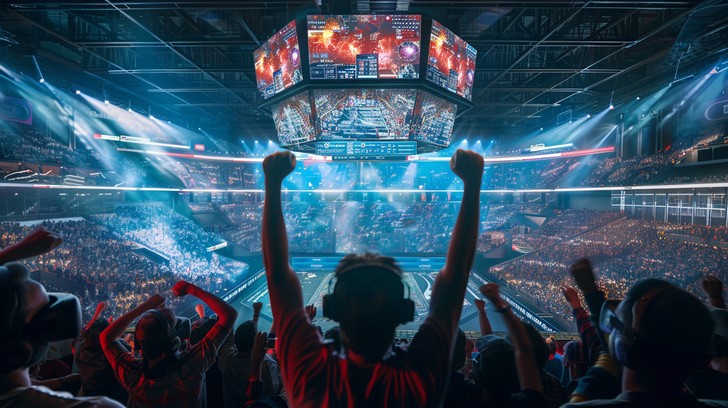
Cloud Gaming is attempting to democratize this. By offloading the processing power to data centers, services allow players with modest hardware to join the community. However, for the core enthusiast, building a rig is a rite of passage. The aesthetic of the setup—Gaming Chairs, RGB lighting, custom loops—is a sub-culture within itself, celebrated on platforms like Reddit and Instagram.
Preservation and History
As we look forward, the community also looks back. Game Emulation and Gaming History are vital for preserving the medium. Retro Gaming enthusiasts ensure that the roots of the industry are not lost. When a new game releases that pays homage to 16-bit classics, it bridges the gap between older gamers and the new generation, creating a shared language of mechanics and aesthetics.
Section 4: Recommendations for the Modern Gamer
Finding Your Niche
With the sheer volume of Game Releases, it is easy to feel overwhelmed. The best approach for a fulfilling gaming experience is to find a specific community niche. If you enjoy narrative and character progression, dive deep into the RPG Games community. Look for hubs that curate these titles and offer tutorials. If you crave competition, focus on one or two FPS Games and invest time in learning the maps and mechanics.
Investing in the Right Gear
Don’t fall for marketing hype; buy Gaming Peripherals that suit your genre.
- FPS Players: Prioritize high-refresh-rate Gaming Monitors (144Hz+) and lightweight Gaming Mice.
- RPG/Strategy Players: Focus on color-accurate displays (IPS or OLED) to appreciate the art style, and comfortable Gaming Chairs for long sessions.
- Sim Enthusiasts: For racing or flight sims, Racing Wheels and Flight Sticks are transformative upgrades that offer immersion standard controllers cannot match.
Participate in Hubs and Betas
To get the most out of the modern ecosystem, participate in community hubs. engaging with “featured games” or testing cycles often provides early access to content and, increasingly, eligibility for community rewards. It also allows you to provide feedback that can shape the final game, giving you a sense of ownership over the product.
Embrace New Tech
Keep an eye on VR Gaming and AR Gaming. While still maturing, these platforms offer the most immersive social experiences available. Additionally, don’t shy away from Mobile Gaming. Devices are now powerful enough to run complex ports, allowing you to stay connected to your community while away from your battlestation.
Conclusion
The Gaming Community has evolved from a scattered collection of hobbyists into a global cultural and economic force. It is a world where Gaming Culture influences fashion, music, and technology. From the strategic depths of turn-based RPGs to the lightning-fast reactions of competitive shooters, there is a place for everyone.
The introduction of community hubs, reward pools, and direct developer-player interaction has democratized the industry, making players active stakeholders rather than passive consumers. Whether you are testing a new featured game on a digital hub, upgrading your Gaming PC, or discussing lore in a Discord server, you are part of a vibrant, living ecosystem. As technology advances and the lines between the digital and physical worlds continue to blur, the connections formed through gaming will only become more significant. The weekends are indeed for gaming, but the community lives on 24/7.