Introduction: The Primary Interface of PC Gaming
In the vast ecosystem of PC Gaming, the keyboard remains the most critical bridge between human intent and digital action. While Graphics Cards render the breathtaking worlds of AAA Games and Gaming Monitors display them at blistering refresh rates, the keyboard is the tactile instrument of agency. It is where strategy meets reflex. Over the last decade, the humble peripheral has undergone a radical transformation, evolving from simple office equipment into highly specialized Gaming Tech designed for precision, speed, and aesthetic expression.
The modern landscape of Gaming Keyboards is no longer defined merely by the presence of RGB lighting. It is a complex market driven by nuanced form factors, such as the increasingly popular 75% layout, and cutting-edge actuation technologies like magnetic Hall Effect switches. Whether you are following Esports News to see what the pros are using in Counter-Strike News updates, or you are a casual player enjoying the latest Indie Games, understanding the technical architecture of your input device is essential. This article explores the intricate engineering behind mechanical keyboards, the shift toward wireless freedom without latency, and how distinct genres—from FPS Games to MMORPG News heavyweights—dictate hardware choices.
Section 1: Form Factors and The Shift to Compact Efficiency
The Rise of the 75% and 65% Layouts
For years, the standard “Full Size” (104-key) board was the default for Gaming Desktops. However, as Competitive Gaming evolved, players realized that the number pad was largely redundant for titles like Valorant News highlights or Overwatch News updates. The industry saw a massive shift toward “Tenkeyless” (TKL) boards, which removed the numpad to provide more desk space for mouse movement. This is crucial for low-DPI gamers who require sweeping arm movements for precise aiming.
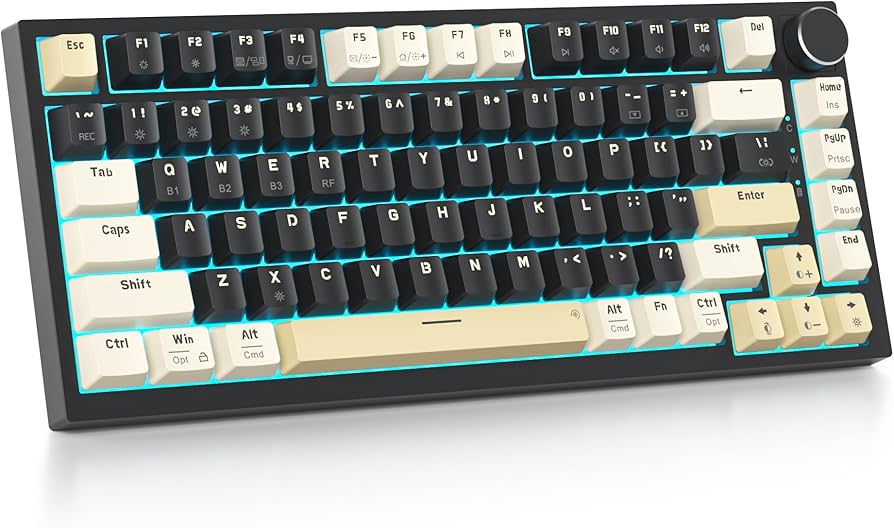
Recently, the industry has refined this further with the 75% layout. This form factor is currently the “sweet spot” in Gaming Hardware design. It retains the dedicated arrow keys and the function row (F1-F12)—essential for MOBA Games like League of Legends News or Dota 2 News implies—but compresses the navigation cluster into a vertical column. The result is a keyboard that offers nearly the same functionality as a TKL board but with a footprint closer to a compact 60% board. This efficiency appeals to users with limited desk space or those who travel for tournaments.
Ergonomics and Mouse Space
The correlation between keyboard size and gaming performance is well-documented in Gaming Community discussions. A smaller keyboard allows the user to position their hands closer together, aligning with the shoulders for better ergonomics. This reduces strain during marathon sessions of Battle Royale titles like Fortnite News or Apex Legends News. Furthermore, the extra mouse real estate allows for larger Gaming Mice pads, which are essential for the micro-adjustments required in high-stakes shooters. This trend has even influenced Gaming Laptops, where manufacturers are finding ways to squeeze mechanical switches and optimized layouts into portable chassis.
The Ultra-Compact 60% and Custom Layouts
On the extreme end, we have 60% keyboards, which strip away the arrow keys and function row entirely, relying on software layers to access these commands. While popular among enthusiasts and minimalists, they can be limiting for Strategy Games or RPG Games where multiple distinct keybinds are necessary. However, the rise of “Hot-swappable” PCBs (Printed Circuit Boards) has allowed users to build custom layouts that fit their specific needs, bridging the gap between Game Design requirements and hardware capability.
Section 2: Under the Hood – Switch Technology and Actuation
Mechanical vs. Optical vs. Magnetic
The heart of any gaming keyboard is the switch. Traditional mechanical switches (Linear, Tactile, Clicky) rely on a physical metal contact leaf closing a circuit. While reliable, they have a fixed actuation point and a physical “debounce” delay. In the high-speed world of Call of Duty News, every millisecond counts. This has led to the development of Optical switches, which use a beam of light to register a press, eliminating physical contact wear and increasing speed.
However, the bleeding edge of Gaming Tech is currently the Magnetic (Hall Effect) switch. These switches use a magnet on the stem and a sensor on the PCB to detect depth. This allows for “Rapid Trigger” technology. In traditional switches, the key must reset past a fixed point before it can be pressed again. With Rapid Trigger, the key resets the moment you lift your finger slightly, allowing for near-instantaneous repeated inputs. This is a game-changer for movement-heavy games and is frequently discussed in Gaming Reviews for top-tier peripherals.
Lubrication, Stabilizers, and Acoustics
Beyond raw performance, the Gaming Culture has developed a deep appreciation for the “feel” and “sound” of a keyboard. This stems from the custom mechanical keyboard hobby, which has bled into mainstream Gaming Peripherals. Factory-lubed switches provide a smoother travel, reducing scratchiness. High-quality stabilizers prevent the spacebar and shift keys from rattling. Manufacturers are now including sound-dampening foam layers inside the case to eliminate hollow pings.
These acoustic properties might seem trivial to an outsider, but for a streamer sharing their gameplay via Twitch News or a content creator on YouTube, the sound of the keyboard is part of the audio mix. A “thocky” or “creamy” sounding board is often perceived as a mark of quality in the Gaming Industry.
Keycap Materials: PBT vs. ABS
The interface between the finger and the switch is the keycap. Cheap boards use ABS plastic, which develops a greasy shine over time. Premium Gaming Keyboards now standardly use Double-Shot PBT (Polybutylene Terephthalate). PBT is denser, textured, and resistant to wear. The “Double-Shot” molding process ensures the legends (letters) never fade, which is vital for longevity, especially given the heavy use of WASD keys in FPS Games and Minecraft News survival modes.
Section 3: Connectivity, Customization, and Ecosystems
The Wireless Revolution: 2.4GHz vs. Bluetooth
Historically, PC Gaming purists scoffed at wireless peripherals due to input lag. That narrative is now obsolete. Modern proprietary 2.4GHz wireless protocols (often branded differently by major manufacturers) offer polling rates of 1000Hz or even 4000Hz, rendering them indistinguishable from wired connections. This technology has liberated Gaming Setups from cable clutter.
It is important to distinguish between 2.4GHz and Bluetooth. Bluetooth is excellent for productivity and connecting to mobile devices for Mobile Gaming or tablets, but it introduces too much latency for competitive play. A top-tier wireless gaming keyboard usually offers tri-mode connectivity: Wired (USB-C), 2.4GHz (Dongle), and Bluetooth, allowing seamless switching between a high-performance Gaming PC and a work laptop.
Thematic Editions and RGB Integration
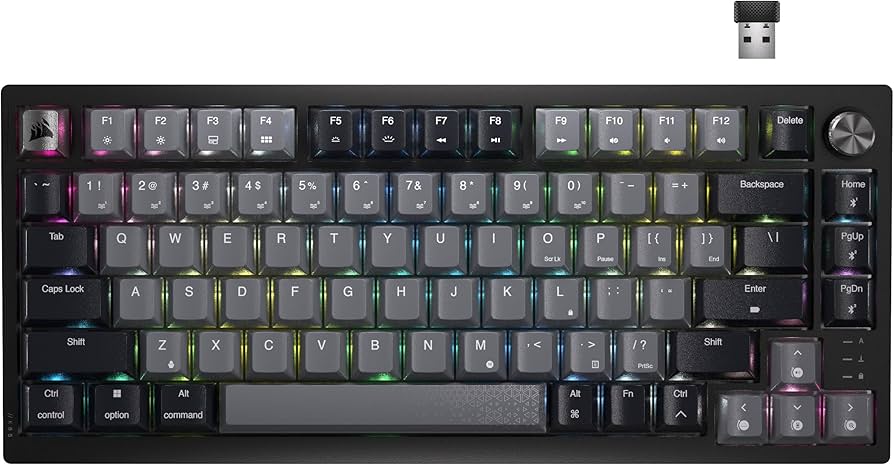
Aesthetics play a massive role in Gaming Community identity. We are seeing a surge in “Special Edition” keyboards tied to major Game Releases. These aren’t just simple logo slaps; they often feature custom keycap colorways, laser-etched chassis designs, and exclusive RGB lighting profiles that react to in-game events. For example, a keyboard might flash red when your health is low in a shooter or pulse blue when your ultimate ability is ready in Overwatch News.
This integration requires robust software. Whether it is Unity-based indie titles or massive Unreal Engine projects, developers are increasingly using APIs to control Gaming Peripherals lighting. This immersion extends beyond the screen, syncing your keyboard, mouse, and even Gaming Headsets into a unified light show. This is a staple in Esports News arenas, where team colors are blasted across player setups.
Software Suites and Macros
The utility of a keyboard is often defined by its software. For players of MMORPG News titles like World of Warcraft, the ability to record complex macros is non-negotiable. A single key press can execute a sequence of spell casts. On-board memory is a critical feature here, allowing players to save their profiles directly to the keyboard. This means if they plug their device into a tournament computer or a friend’s console (relevant for PlayStation News and Xbox News regarding cross-platform peripheral support), their settings remain intact without installing drivers.
Section 4: Strategic Recommendations and Future Trends
Matching the Board to the Genre
When selecting a keyboard, one must consider their primary gaming diet:
- FPS (Call of Duty, Valorant, CS2): Prioritize 75% or 60% layouts to maximize mouse space. Look for Linear switches (Red or Silver) or Magnetic Rapid Trigger switches for the fastest response times.
- MOBA/RTS (League of Legends, StarCraft): A TKL or 75% layout is ideal. You need the F-keys for camera control or ability leveling. Tactile switches (Brown) can help confirm key presses during chaotic team fights.
- MMO (WoW, Final Fantasy XIV): Full-sized or TKL with dedicated macro keys are preferred. The extra buttons are invaluable for managing inventories and skill rotations.
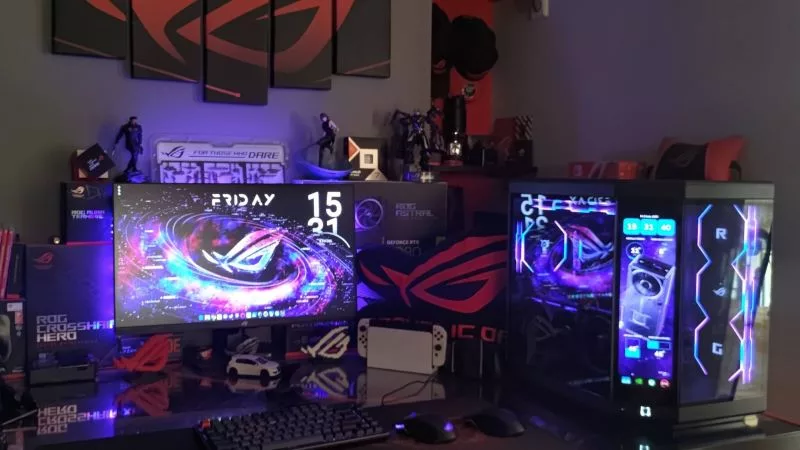
- General/Immersive (Cyberpunk 2077, Witcher): A wireless 75% board offers a great balance of comfort and immersion. The focus here is often on the typing experience and RGB ambiance.
The Intersection of Console and PC
As the lines between Console Gaming and PC blur, with PlayStation News and Xbox News frequently announcing keyboard and mouse support for major titles, the demand for versatile peripherals is rising. A high-quality wireless keyboard is now a viable living room accessory for console gamers playing cross-platform shooters. Furthermore, with the advent of Cloud Gaming and Game Streaming services, having a portable, high-performance input device allows for a premium experience on smart TVs or low-spec hardware.
Durability and Maintenance
Investing in a mechanical keyboard is investing in longevity. Unlike membrane keyboards, mechanical switches are rated for 50 to 100 million keystrokes. However, maintenance is key. The “Hot-swap” feature mentioned earlier not only allows for customization but also repairability. If a single switch dies, you can replace it for a few cents rather than discarding the entire unit. This sustainability aspect is becoming a talking point in Gaming Tech reviews.
Conclusion: The Keystone of the Battlestation
The gaming keyboard has transcended its origins as a utilitarian tool to become a centerpiece of Gaming Culture. Whether it is a sleek, wireless 75% unit designed for the frenetic pace of Call of Duty News updates, or a fully custom-built board for the typing enthusiast, the technology inside these devices is more advanced than ever. From the physics of Hall Effect sensors to the chemistry of PBT plastics and the wireless engineering of 2.4GHz protocols, every aspect is tuned for performance.
As we look toward the future, with developments in VR Gaming and AR Gaming potentially changing how we interact with digital spaces, the tactile feedback of a physical key remains irreplaceable for precision inputs. For now, whether you are grinding rank in Competitive Gaming, exploring vast worlds in Retro Gaming emulators, or developing the next big hit in Unity News, your keyboard is your primary weapon. Choose it wisely, for it is the link between your mind and the machine.