




Introduction: The Infinite Canvas of PC Gaming
The landscape of PC Gaming is currently undergoing a renaissance of creativity and technical prowess. Unlike the walled gardens of Console Gaming—where hardware cycles dictate the pace of innovation—the PC platform remains an open frontier. It is here that Game Development studios, from massive AAA powerhouses to scrappy indie teams, are pushing the boundaries of what is possible. We are seeing a surge in Gaming News surrounding titles that refuse to be boxed into a single category. The modern gamer no longer has to choose between historical drama and futuristic sci-fi; developers are increasingly merging these distinct aesthetics into cohesive, high-octane experiences.
A prime example of this trend is the emergence of “genre-blending” titles, such as the concept of a Samurai Space Opera. This specific fusion represents more than just a thematic choice; it signifies the maturation of Game Design and the raw power of modern Gaming Hardware. To render the intricate armor of a feudal warrior alongside the neon-drenched reflections of a futuristic starship requires a synergy of art and technology that only the PC ecosystem can fully unleash. In this article, we will explore how the flexibility of the PC platform is fueling the rise of complex Action RPGs, the hardware required to run them, and the peripherals that immerse players in these fantastical worlds.
Section 1: The Evolution of Genre Fusion and Game Engines
Breaking the Boundaries of Traditional Genres
For decades, Video Games were often strictly categorized. You had your FPS Games, your Strategy Games, and your RPG Games. However, the modern Gaming Industry thrives on hybridization. The concept of a “Samurai Space Opera” perfectly encapsulates this shift. It combines the disciplined, melee-focused combat of a soulslike or hack-and-slash title with the narrative scale and visual spectacle of science fiction. This fusion appeals to a broad demographic, capturing fans of Retro Gaming who grew up on classic cinema and younger players raised on fast-paced Battle Royale mechanics.
This creative freedom is largely powered by advancements in game engines. Unreal Engine News frequently highlights features like Nanite and Lumen, which allow developers to create geometrically complex environments with realistic global illumination without completely tanking performance. Similarly, updates covered in Unity News show a commitment to versatile rendering pipelines. These tools allow a small team to build a galaxy that feels as vast as a Mass Effect title while refining combat mechanics that rival Devil May Cry or Sekiro. The result is a new wave of AAA Games and high-budget Indie Games that feel distinct and unconstrained by reality.
The Role of Physics and AI in Action RPGs
Visuals are only half the battle. In a high-speed Action RPG involving plasma katanas and gravity-defying movement, the underlying physics engine is critical. PC processors (CPUs) are tasked with calculating complex collision detection and enemy AI behavior. In a scenario where a player is fighting a horde of robotic enemies on a crumbling space station, the CPU must track the trajectory of every projectile and the ragdoll physics of every defeated foe.
Game Reviews often cite “game feel” as a deciding factor in a title’s success. This “feel” is derived from low-latency input processing and high-tick-rate physics simulations. On a high-end Gaming PC, these calculations can be run at higher frequencies than on consoles, resulting in combat that feels snappier and more responsive—a non-negotiable requirement for competitive Esports News titles like Valorant News or Counter-Strike News, but equally important in single-player action games where precision parrying is a core mechanic.
Section 2: The Hardware Ecosystem: Powering the Spectacle
Graphics Cards: The Engine of Immersion
To bring a visually demanding Samurai Space Opera to life, the heavy lifting is done by the GPU. Graphics Cards have evolved from simple polygon pushers to complex neural processing units. The integration of Ray Tracing is particularly relevant for sci-fi settings. Imagine the reflection of a laser sword in a rain-slicked cyberpunk street; Ray Tracing calculates these light paths in real-time, creating an atmosphere that baked-in lighting simply cannot match.
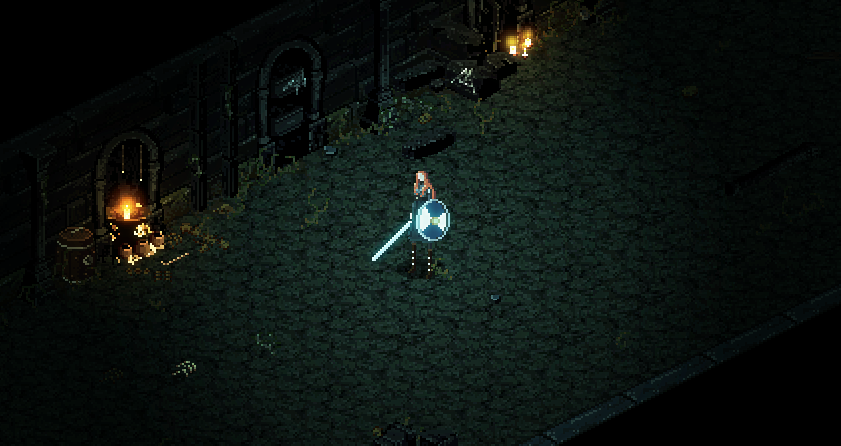
However, this visual fidelity comes at a cost. This is where upscaling technologies like NVIDIA’s DLSS (Deep Learning Super Sampling), AMD’s FSR, and Intel’s XeSS come into play. These technologies allow gamers to render the game at a lower internal resolution (saving performance) and use AI to upscale the image to 4K. For PC Gaming enthusiasts, this means achieving high frame rates without sacrificing the crisp details of intricate character models or vast space vistas. Whether you are following NVIDIA News or AMD News, the focus is clear: delivering cinematic fidelity at playable framerates.
The Importance of Storage and Memory
The days of long loading screens are vanishing, thanks to the widespread adoption of NVMe SSDs. In a massive Action RPG, players might transition from a planetary surface to a spaceship interior seamlessly. DirectStorage technology allows the GPU to pull asset data directly from the SSD, bypassing the CPU bottleneck. This is crucial for open-world games where texture streaming pop-in can break immersion.
Furthermore, the RAM requirements for modern gaming are creeping up. While 16GB has been the standard, Gaming PCs targeting ultra settings in 2025 are increasingly moving toward 32GB. This headroom allows for high-resolution textures, complex mods, and multitasking (such as running Game Streaming software like OBS or watching Twitch News on a second monitor) without stuttering.
Display Technology: Seeing is Believing
Your hardware is only as good as the screen you view it on. Gaming Monitors have seen rapid innovation. For a fast-paced action game, a high refresh rate (144Hz, 240Hz, or even 360Hz) is essential to reduce motion blur. OLED technology is also becoming a favorite for sci-fi gamers. The ability of OLED panels to turn off individual pixels results in “true black,” making the contrast between deep space and bright energy weapons pop incredibly well. Ultrawide monitors (21:9 or 32:9 aspect ratios) offer another layer of immersion, filling the player’s peripheral vision and making the experience feel more like a cockpit or a cinematic viewport.
Section 3: Peripherals and the Player Experience
Control Schemes: Keyboard vs. Controller
One of the defining debates in Gaming Culture is the choice of input device. For a Samurai Action RPG, the choice often dictates the playstyle. Gaming Keyboards and Gaming Mice offer unparalleled precision for aiming ranged weapons and navigating complex menus (a staple of MMORPG News and Strategy Games). The tactile feedback of mechanical switches—whether linear Red switches for speed or tactile Brown switches for confirmation—gives PC gamers a distinct connection to their actions.
Conversely, Game Controllers are often preferred for third-person melee combat. The analog movement allows for subtle adjustments in walking speed and direction that a binary WASD setup struggles to replicate. Modern PC gaming embraces this duality; players can seamlessly switch between a mouse for inventory management and a controller for combat. For niche enthusiasts, Flight Sticks and Racing Wheels add layers to the “Space Opera” side of the equation, allowing for immersive piloting segments that standard inputs can’t match.
Audio and Comfort
Sound design is the unsung hero of immersion. In a genre-blending game, the clash of steel needs to sound distinct from the hum of a shield generator. High-quality Gaming Headsets with spatial audio (like Dolby Atmos or DTS:X) allow players to pinpoint enemy locations by sound alone—a critical skill in FPS Games like Call of Duty News or Overwatch News, but also vital for situational awareness in RPGs.
Furthermore, as game length increases—with some RPGs demanding 100+ hours—ergonomics become vital. Gaming Chairs are often dismissed as marketing fluff, but proper lumbar support is essential for long sessions. The rise of standing desks in the Gaming Tech space also suggests a community becoming more health-conscious while maintaining their hobby.
Section 4: The Digital Marketplace and Community Ecosystem
The Role of Storefronts and Discovery
The success of niche titles relies heavily on digital distribution platforms. Steam News and Epic Games News often highlight the algorithmic discovery that helps unique games find their audience. Unlike physical retail, where shelf space is limited to guaranteed hits like FIFA or Madden, digital storefronts allow a “Samurai Space Opera” to sit side-by-side with Fortnite News or League of Legends News. The wishlist system on Steam, in particular, has become a vital metric for developers to gauge interest before launch.
Game Releases on PC also benefit from “Early Access” models. This allows developers to release a playable portion of the game and iterate based on Gaming Community feedback. This collaborative development cycle often results in a more polished final product and fosters a loyal fanbase that feels invested in the game’s success.
Modding: The PC Gaming Superpower
Perhaps the greatest advantage of PC gaming is Game Mods. If a player wants their space samurai to wield a historically accurate katana instead of a laser sword, there is likely a mod for that. If they want to improve the lighting beyond the developer’s original vision, “Reshade” presets are available. Modding extends the lifespan of games indefinitely—look no further than Minecraft News or Skyrim, games that have remained relevant for over a decade due to community content. For a new Action RPG, mod support can be the difference between a game that is played for a month and a game that is played for years.
Cloud Gaming and Accessibility
Not everyone can afford an RTX 4090. This is where Cloud Gaming services (like GeForce Now or Xbox Cloud Gaming) bridge the gap. They allow players on modest laptops or even mobile devices to stream high-fidelity games. While latency remains a hurdle for competitive Fighting Games or Apex Legends News, for a single-player RPG, cloud gaming is a viable way to experience high-end graphics without the upfront hardware investment. This democratization of access is vital for the growth of the Gaming Industry.
Conclusion: The Future is Hybrid
The reveal of titles that blend disparate genres like Samurai action and Space Opera is indicative of a healthy, risk-taking industry. PC Gaming remains the incubator for these ideas, providing the raw hardware power to realize them and the open ecosystem to distribute them. As we look toward the future, the line between Indie Games and AAA Games will continue to blur, driven by accessible engines like Unity and Unreal.
For the consumer, there has never been a better time to be a PC gamer. Whether you are tweaking voltage curves on your GPU to squeeze out five more frames, installing 4K texture mods, or simply getting lost in a narrative that spans galaxies and feudal history, the platform offers an experience that is unrivaled in depth and versatility. As technology evolves—bringing us deeper into VR Gaming and AR Gaming—the definition of what a game can be will only expand. The “Samurai Space Opera” is not just a cool concept; it is a testament to the limitless potential of the PC as the ultimate gaming machine.