





The landscape of Gaming Tech has evolved dramatically over the last decade. What was once a hobby dominated by standard office equipment has transformed into a multi-billion dollar industry driven by precision engineering, aesthetic customization, and the relentless pursuit of performance. In the world of PC Gaming, and increasingly in Console Gaming involving PlayStation News and Xbox News, the hardware that sits on your desk is just as critical as the components inside your case. While a powerful GPU and CPU are the engines of your experience, your peripherals—Gaming Keyboards, Gaming Mice, and Gaming Headsets—are the steering wheel and transmission. They are the interface through which intent translates into digital action.
This article explores the intricate ecosystem of modern gaming hardware. We will move beyond the marketing buzzwords to understand the technical specifications that actually impact gameplay in FPS Games, RPG Games, and MOBA Games. From the rise of Hall Effect sensors in keyboards to the audiophile-grade drivers finding their way into gaming audio, we will dissect what makes a “battle station” truly competitive. whether you are following Esports News to emulate the pros or simply looking to immerse yourself in the latest AAA Games, understanding the nuances of your gear is essential.
Section 1: The Input Trinity – Keyboards, Mice, and Controllers
The core of any gaming setup lies in the input devices. In the realm of Competitive Gaming, milliseconds matter. The difference between a win and a loss in high-stakes titles like Counter-Strike News, Valorant News, or Overwatch News often comes down to input latency and mechanical precision.
The Revolution of Gaming Keyboards
Gone are the days when a membrane keyboard sufficed for serious gaming. The standard has shifted almost entirely to mechanical and optical-mechanical switches. However, the technology continues to advance. The current gold standard in high-tier Gaming Keyboards is the implementation of Hall Effect switches (magnetic switches). Unlike traditional mechanical switches that rely on physical metal contact to actuate, Hall Effect switches use magnets and sensors to detect key depth.
This technology allows for features like “Rapid Trigger,” where a key resets the moment you lift your finger slightly, rather than requiring the switch to pass a fixed reset point. For movement-heavy games found in Apex Legends News or Fortnite News, this allows for near-instant strafing adjustments. Furthermore, the customization of actuation points—allowing a player to set a key to activate at 0.1mm for speed or 2.0mm for typing accuracy—has bridged the gap between gaming and productivity.
Precision Pointing: The Modern Gaming Mouse
Gaming Mice have undergone a “weight loss” revolution. The trend has moved aggressively toward lightweight designs, often featuring honeycomb shells or advanced composite materials to drop weights below 60 grams. The physics are simple: less mass equals less inertia, allowing for faster starting and stopping movements. This is crucial for “flick” shots in shooters.
Beyond weight, sensor technology has reached a point of diminishing returns, yet innovation persists. Modern sensors now support polling rates of 4000Hz or even 8000Hz, compared to the standard 1000Hz. This means the mouse reports its position to the computer 8000 times per second, drastically reducing micro-stutter and input lag. While casual players of Minecraft News or Stardew Valley might not notice the difference, professionals in the League of Legends News or Dota 2 News circuits rely on this granular precision.
Controllers and Cross-Platform Synergy
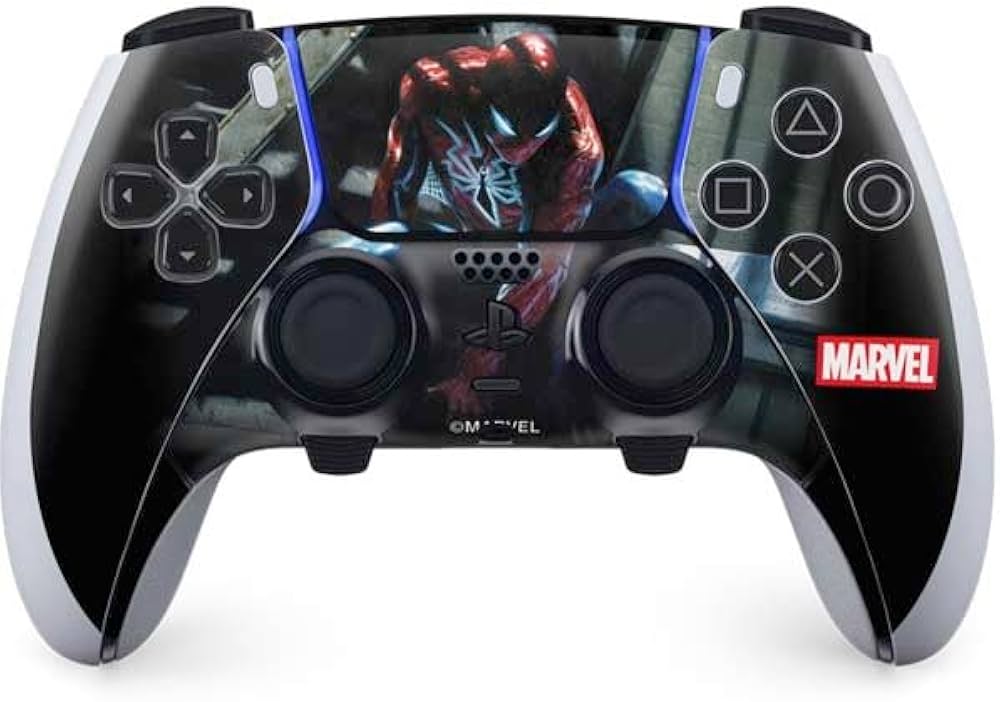
With the blurring lines between PC and console, Game Controllers have also seen “Pro” iterations. Whether it is for Nintendo News enthusiasts or PC gamers who prefer a gamepad for Elden Ring, the market now offers controllers with back paddles, adjustable trigger stops, and swappable thumbsticks. Hall Effect technology is also entering the controller space to combat “stick drift,” a notorious issue where analog sticks register movement when neutral. This longevity is vital for the Gaming Community that invests heavily in premium hardware.
Section 2: The Visual and Auditory Experience
IT technician working on server rack – Technician working on server hardware maintenance and repair …
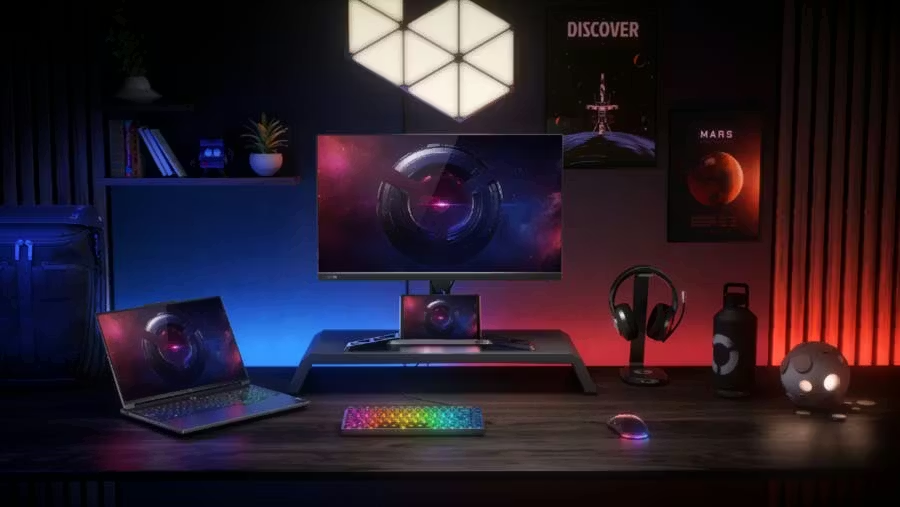
Immersion is a two-fold sensory experience involving sight and sound. Gaming Hardware manufacturers are constantly pushing the boundaries of display technology and audio engineering to create more realistic environments for VR Gaming, AR Gaming, and traditional flat-screen experiences.
Display Technology: Refresh Rates and Panel Types
Gaming Monitors act as the window to the digital world. The current battleground is fought on two fronts: Refresh Rate and Panel Technology. For years, TN (Twisted Nematic) panels were the king of speed, offering the fastest response times at the cost of color accuracy. IPS (In-Plane Switching) panels eventually caught up, offering great colors with 1ms response times.
However, the new frontier is OLED. OLED panels offer instantaneous pixel response times (often 0.03ms) and infinite contrast ratios. This makes them ideal for atmospheric Horror Games or visually stunning Indie Games where lighting is key. On the competitive side, we are seeing 360Hz and even 500Hz monitors becoming available. These ultra-high refresh rates, when paired with powerful Graphics Cards like the NVIDIA RTX 40-series or AMD Radeon RX 7000-series, provide motion clarity that mimics real life, giving snipers in Call of Duty News updates a tangible advantage.
The Auditory Landscape: Headsets and Spatial Audio
Sound is often the “wallhack” of the real world. Gaming Headsets have evolved from bass-heavy cans to precision instruments. The integration of spatial audio technologies (like Dolby Atmos or DTS Headphone:X) allows players to pinpoint footsteps, reloads, and ability usage in a 3D space. This positional audio is critical in Battle Royale games where verticality plays a massive role.
For Twitch News followers and aspiring streamers, the microphone quality on headsets has improved, though standalone USB microphones remain the standard for broadcasting. Additionally, the rise of open-back headsets in the gaming space allows for a wider soundstage, making MMORPG News updates and open-world exploration feel more expansive. We are also seeing a convergence of audiophile tech and gaming, with planar magnetic drivers appearing in high-end gaming headsets, offering superior distortion-free sound compared to dynamic drivers.
Section 3: Ergonomics, Ecosystems, and Niche Hardware
A comprehensive setup extends beyond the primary peripherals. Gaming Chairs, desks, and simulation gear play a vital role in the longevity of a gamer’s health and the depth of their immersion.
The Ergonomics Debate
The Gaming Industry popularized the “racing style” bucket seat, but the narrative is shifting. While the aesthetic fits the “gamer” vibe, many in the Gaming Culture are moving toward ergonomic office chairs that prioritize lumbar support and adjustability over aggressive bolstering. However, premium gaming chair manufacturers are responding by integrating hidden lumbar systems, magnetic memory foam pillows, and more breathable fabrics to compete with high-end office furniture.
Simulation and Specialized Gear
For specific genres, generic peripherals fall short. The resurgence of space sims and the consistent popularity of racing sims have bolstered the market for Racing Wheels and Flight Sticks (HOTAS systems). With the release of titles like Microsoft Flight Simulator and various F1 racing games, force feedback technology has become incredibly sophisticated. Direct Drive wheels, where the steering wheel is mounted directly to the motor shaft, offer granular feedback that details tire slip and road texture, providing an immersion level that a controller simply cannot match.
Software Ecosystems and RGB
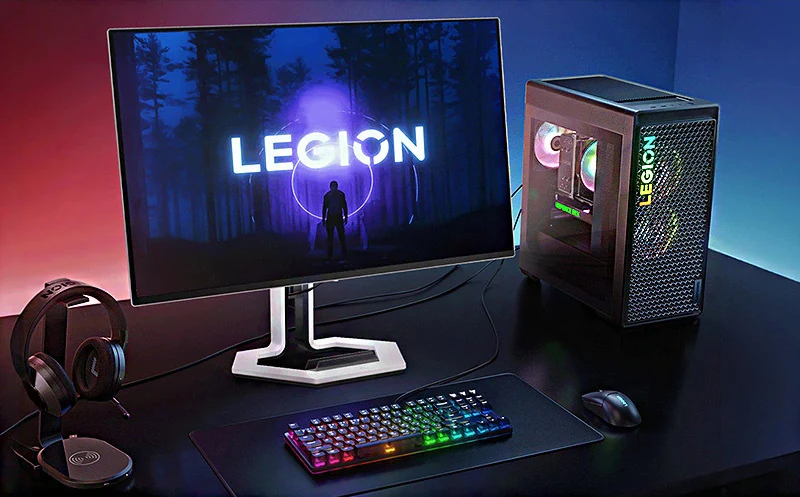
Modern Gaming Tech is inextricably linked to software. Companies like Razer, Corsair, Logitech, and SteelSeries have developed massive software suites (Synapse, iCUE, G Hub, Engine) that control everything from RGB lighting synchronization to macro programming. This ecosystem approach encourages brand loyalty; if your Gaming Mouse, Gaming Keyboard, and Gaming Headset are all from the same brand, the lighting effects can sync across all devices and even react to in-game events in titles like Diablo IV or Cyberpunk 2077.
Section 4: Implications, Trends, and Future Outlook
As we look toward the future of Game Development and hardware, several trends are emerging that will dictate how we play. The integration of AI, the push for wireless ubiquity, and the rise of cloud computing are reshaping the landscape.
The Wireless Revolution
A decade ago, “wireless” was synonymous with “lag.” Today, proprietary 2.4GHz wireless protocols have rendered that notion obsolete. In blind tests, top esports athletes often cannot distinguish between wired and wireless modes on top-tier mice and keyboards. This shift allows for cleaner setups and greater freedom of movement. The challenge now lies in battery life and charging convenience, leading to innovations like mousepads that wirelessly charge the mouse while in use.
Cloud Gaming and Mobile Integration
Cloud Gaming services (like Xbox Cloud Gaming or GeForce Now) are changing the hardware requirement. If the processing is done in a data center, the end-user device becomes a display and input terminal. This has led to a boom in Mobile Gaming controllers that clamp onto smartphones, effectively turning them into handheld consoles like the Nintendo Switch or Steam Deck. This democratization of high-fidelity gaming means that Game Releases are accessible to a wider audience, but it also places a higher premium on internet infrastructure and low-latency input devices for mobile.
The Role of Mods and Community
The Gaming Community has always been a driver of innovation. Game Mods often extend the life of games, but hardware mods are equally prevalent. The “custom mechanical keyboard” hobby has exploded, influencing mainstream gaming brands to offer hot-swappable switches and lube kits. Similarly, the mouse modding community (changing skates, switches, and reducing weight) pushes manufacturers to adopt these enthusiast tweaks as standard features. This feedback loop between the community and the Gaming Industry ensures that products are constantly evolving to meet the hyper-specific needs of gamers.
Considerations for the Buyer
When investing in Gaming Tech, users must consider their primary genre:
- FPS Players: Prioritize lightweight mice, high refresh rate monitors, and stereo headsets with good imaging.
- RPG/MMO Players: Benefit from keyboards with dedicated macro keys, mice with side-button grids (MMO mice), and IPS/OLED monitors for visual fidelity.
- Sim Racers: Require sturdy desks or rigs to mount force-feedback wheels and pedals.
Conclusion
The world of Gaming Tech is vast and rapidly changing. From the tactile satisfaction of a mechanical keyboard to the immersive precision of a high-refresh-rate OLED monitor, every component plays a role in the overall experience. Whether you are chasing the competitive high of Esports News headlines or diving into the nostalgia of Retro Gaming and Game Emulation, the hardware you choose becomes an extension of yourself.
As Unity News and Unreal Engine News continue to promise more realistic graphics and physics, the hardware required to interface with these worlds must keep pace. The “ultimate” setup is no longer just about the most expensive Gaming PC; it is about a curated ecosystem of peripherals that match your playstyle, ergonomic needs, and aesthetic preferences. By understanding the technology behind the switches, sensors, and screens, gamers can make informed decisions that not only improve their K/D ratio but also enhance the sheer joy of play.
In this golden age of interactive entertainment, the barrier between the player and the game is thinner than ever, dissolved by engineering marvels that fit right under our fingertips.