
The Shifting Tides of Console Gaming: A Deep Dive into PlayStation’s Future
In the ever-accelerating world of digital entertainment, the gaming industry remains a titan of innovation and intense competition. For decades, titans like Sony, Microsoft, and Nintendo have battled for dominance, with each console generation bringing new hardware, groundbreaking software, and evolving business strategies. Recently, the digital chatter within the gaming community has reached a fever pitch, fueled by whispers of unannounced hardware and surprise software showcases. This constant stream of PlayStation News highlights a significant strategic evolution for Sony. The company is moving away from the traditional, monolithic E3-style announcements and embracing a more agile, direct-to-consumer communication model through events like State of Play. This shift isn’t just about marketing; it signals a deeper change in how Sony approaches hardware refreshes, software development, and the expansion of its ecosystem. This article will provide a comprehensive technical analysis of Sony’s current trajectory, deconstructing the potential for new hardware, the future of its exclusive game pipeline, and the broader implications for the Gaming Industry as a whole.
Section 1: The New Communication Cadence and Mid-Cycle Hardware Philosophy
Sony’s departure from the E3 show floor marked a pivotal moment in Gaming News. This move was not an abdication of its marketing throne but a calculated pivot towards controlling its own narrative. By utilizing its own digital platforms—the high-production PlayStation Showcase for major reveals and the more frequent, focused State of Play for updates and smaller announcements—Sony can dictate the timing, pacing, and context of its news, bypassing the noise of a crowded convention. This strategy allows for more surgical strikes, generating sustained buzz throughout the year rather than concentrating it into a single week in June. It’s a model that echoes the success of Nintendo News with its “Direct” presentations, proving that a direct line to the Gaming Community is incredibly powerful.
The “Pro” Precedent: Why a Mid-Generation Refresh Makes Sense
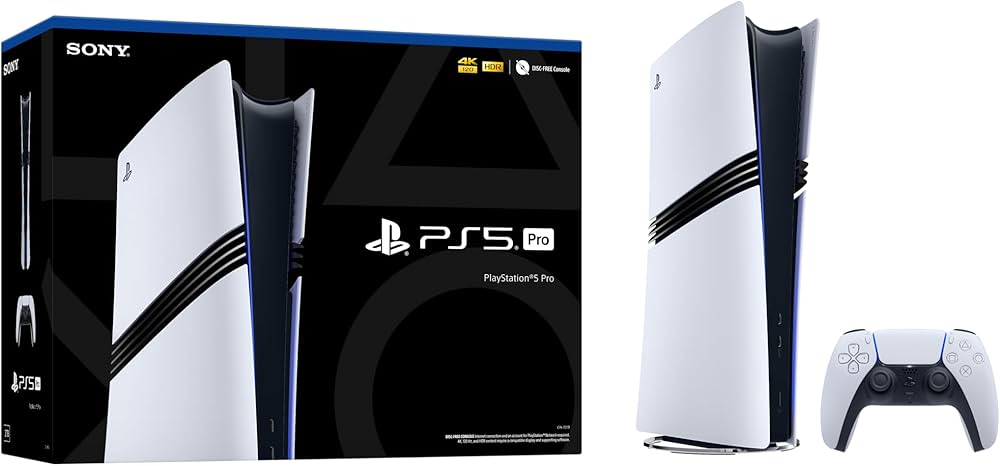
The conversation around a potential “PS5 Pro” is not just idle speculation; it’s rooted in historical precedent and technological necessity. The PlayStation 4 Pro set the stage, offering a significant performance uplift that catered to the burgeoning 4K TV market and provided developers with more horsepower for enhanced visuals and smoother frame rates. In the current generation, the technological landscape is advancing even faster. The widespread adoption of high-refresh-rate Gaming Monitors and TVs, coupled with the demanding nature of technologies like real-time ray tracing in Unreal Engine 5, creates a compelling case for a more powerful console. A mid-cycle refresh serves several key purposes:
- Future-Proofing for Developers: A more powerful console gives developers working on ambitious AAA Games a higher performance ceiling, ensuring that titles released late in the generation are not severely constrained by 2020-era hardware.
- Catering to the Enthusiast Market: Just as in PC Gaming, there is a segment of the Console Gaming audience that craves the best possible performance. A “Pro” model caters directly to these users, who are willing to pay a premium for higher resolutions, more stable frame rates in demanding FPS Games, and superior graphical fidelity in sprawling RPG Games.
- Maintaining Competitive Parity: With constant advancements in Graphics Cards from Nvidia and AMD, and powerful offerings from competitors, a hardware refresh helps PlayStation maintain its image as a premium, high-performance gaming platform. It keeps the console relevant in technical discussions against high-end Gaming PCs.
This strategy is a delicate balancing act. Sony must ensure that the performance gap is significant enough to justify the new hardware without alienating the massive existing user base of the standard model. All games must remain fully compatible with the base PS5, with the “Pro” version simply offering an enhanced experience—a best practice established successfully during the PS4 generation.
Section 2: Deconstructing the Technical Ambitions of Next-Gen Hardware

While official specifications remain under wraps, we can make educated analyses of what a “PS5 Pro” or similar hardware revision would likely entail. The primary focus would be on boosting the capabilities of the GPU and, to a lesser extent, the CPU, to tackle the bottlenecks of the current system, particularly in graphically intensive scenarios. The goal is to deliver a consistent, high-fidelity experience that pushes the boundaries of what’s possible on a home console.
Potential Specification Upgrades and Their Impact
A hypothetical “PS5 Pro” would likely feature a custom AMD APU built on a more advanced manufacturing process (e.g., 4nm or 5nm), allowing for higher clock speeds and greater transistor density. The key areas for improvement would be:
- GPU Compute Units (CUs) and Clock Speed: The current PS5 GPU has 36 CUs running at a variable clock up to 2.23 GHz. A Pro model could increase the CU count to 60 or more and potentially sustain higher, more stable clock speeds. This raw increase in shader performance would directly translate to better performance in traditional rasterization and, crucially, in ray tracing. The objective would be to make 60 FPS with ray tracing enabled a standard feature in many AAA Games, rather than a “performance mode” compromise.
- AI/ML Acceleration: A major leap could come from dedicated machine learning hardware, similar to Nvidia’s Tensor Cores. This would enable a proprietary, hardware-accelerated upscaling solution, Sony’s version of DLSS. Such a feature, let’s call it PlayStation Spectral Super Resolution (PSSR), would be a game-changer. It would allow games to render internally at a lower resolution (e.g., 1080p or 1440p) and use AI to intelligently reconstruct a pristine 4K or even 8K image, freeing up massive amounts of GPU power for higher frame rates and more complex effects. This is a critical piece of modern Gaming Tech.
- Memory and Storage: While a significant increase in the amount of RAM is unlikely (to maintain compatibility), an increase in memory bandwidth could be possible. The ultra-fast SSD is already a cornerstone of the PS5 experience, but a revised model might offer a larger internal drive (e.g., 2TB) as standard to accommodate the growing size of modern Game Releases.
Real-World Application: What This Means for Gamers
Imagine playing the next epic from a premier PlayStation studio. On a standard PS5, you might have to choose between a “Fidelity Mode” at 4K/30 FPS with ray tracing or a “Performance Mode” at 1440p/60 FPS with ray tracing disabled. On a “PS5 Pro,” the goal would be to eliminate that choice. The ideal scenario would be a single, uncompromised mode offering a dynamic 4K resolution (reconstructed via AI upscaling) at a locked 60 FPS with all graphical features, including advanced ray tracing, enabled. This would bridge the gap between Console Gaming and high-end PC Gaming, offering a premium, plug-and-play experience without the need for extensive settings-tweaking.
Section 3: Software Diversification and the Expansion of PlayStation’s IP
Cutting-edge Gaming Hardware is only as good as the software that runs on it. Sony’s biggest strength has always been its portfolio of critically acclaimed, system-selling exclusive titles. However, the landscape of the Gaming Industry is changing. While the single-player, narrative-driven blockbuster remains a pillar of the PlayStation brand, Sony is actively diversifying its software strategy to capture a wider audience and create more sustainable revenue streams.
From Single-Player Epics to Live-Service Worlds
The acquisition of Bungie, the studio behind the highly successful Battle Royale-adjacent MMO, Destiny 2, was a clear statement of intent. Sony is investing heavily in live-service games. We are seeing this manifest in rumors and announcements of multiplayer projects set in the universes of established IPs. For example, a hypothetical Horizon MMO would take the series’ beloved world and transform it from a solo RPG Games experience into a persistent online world, aligning it with popular titles covered in MMORPG News. This strategy has several benefits:
- Long-Term Engagement: Unlike single-player games that have a finite playtime, live-service titles can retain players for months or even years, generating continuous revenue through battle passes, cosmetic items, and expansions.
- Community Building: Games like Fortnite News and Apex Legends News demonstrate the power of building a massive, engaged Gaming Community around a single title. These games become platforms in their own right, fostering a vibrant culture of Competitive Gaming and Esports News.
- IP Expansion: It allows Sony to explore its rich worlds from new perspectives, deepening fan engagement and expanding the lore in ways not possible in a linear, single-player narrative.
The PC Gaming Olive Branch: A New Frontier
Another crucial element of Sony’s new software strategy is its aggressive push into PC Gaming. Releasing its flagship titles on Steam and the Epic Games Store, typically 1-2 years after their console debut, serves a dual purpose. It generates significant revenue from a new market and acts as a powerful marketing tool for the PlayStation ecosystem. A PC player who loves God of War or Horizon Zero Dawn on their Gaming PC is far more likely to consider buying a PlayStation 5 to play the sequel on day one. This symbiotic relationship, once unthinkable, is now a core tenet of their business, frequently making headlines in Steam News and discussions about the future of platform exclusivity.
Section 4: Building the Ecosystem: Peripherals, Cloud Gaming, and Recommendations
Sony’s vision extends beyond the box sitting under your TV. They are actively building a comprehensive ecosystem of hardware and services designed to keep players engaged with the PlayStation brand wherever they are. This includes specialized Gaming Peripherals and a burgeoning strategy for Cloud Gaming.
The Role of Specialized Hardware

Products like the PlayStation VR2 and the PlayStation Portal remote player demonstrate a commitment to offering diverse gaming experiences. The PS VR2 is a high-end, technically impressive foray into VR Gaming, targeting a niche but dedicated audience. The PlayStation Portal, while not a standalone handheld, is a clever device for Game Streaming within the home. It caters to a specific use case: freeing up the main television while still providing a high-quality, low-latency experience with the excellent DualSense Game Controller haptics intact. These devices, along with high-quality Gaming Headsets and other accessories, create a walled garden of premium, integrated hardware.
Tips and Considerations for Gamers
With so much change on the horizon, gamers face a common dilemma: buy now or wait? Here are some actionable recommendations:
- For the Tech Enthusiast: If you own a high-end 4K/120Hz TV or one of the best Gaming Monitors and always crave the highest possible performance, it may be prudent to wait for official news on a “Pro” console. The potential for a significant performance leap is high.
- For the Average Gamer: The standard PlayStation 5 is, and will remain, a phenomenal and powerful console for its entire lifespan. If you are eager to play current and upcoming exclusives and don’t require cutting-edge, 60 FPS ray-traced visuals in every single game, there is no reason to delay a purchase. All games will be designed to run excellently on the base hardware.
- Consider the Ecosystem: When choosing a platform, look beyond the console itself. Consider Sony’s exclusive game library, its approach to VR Gaming, and peripherals like the Portal. Compare this to the value proposition of Xbox News, which heavily emphasizes its Game Pass subscription service and robust Cloud Gaming infrastructure.
Conclusion: The Dawn of a More Agile PlayStation
The current era of PlayStation News paints a clear picture of a company in strategic evolution. Sony is masterfully orchestrating its future through a multi-pronged approach: a refined, direct-to-consumer communication strategy that keeps the community constantly engaged; a forward-thinking hardware philosophy that embraces mid-generation refreshes to satisfy enthusiast demand and empower developers; a diversified software pipeline that balances blockbuster single-player epics with long-term live-service experiences; and a calculated expansion into the lucrative PC Gaming market. The potential arrival of a more powerful console, combined with an ever-growing library of must-play games and an expanding ecosystem of hardware and services, ensures that PlayStation is not just competing in the present but is actively defining the future of Console Gaming for years to come.