


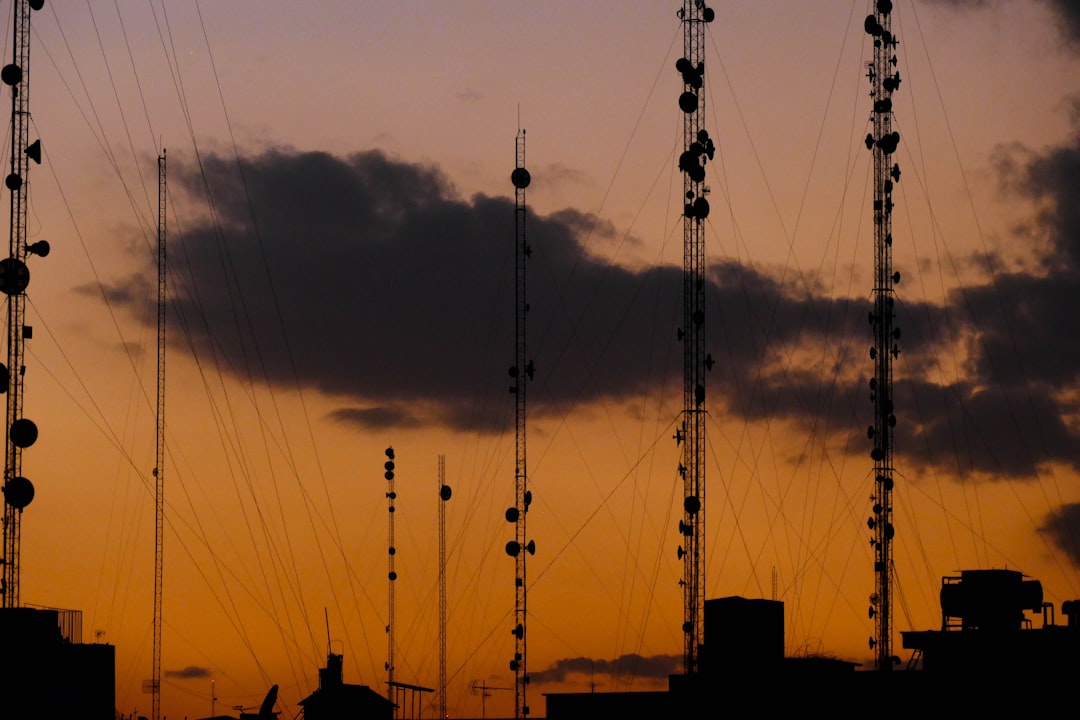
Do you trust the transmitter sitting against your skull?
Have you ever stopped to look at the sheer amount of data required to drive a modern VR headset? We aren’t just talking about streaming a 1080p Netflix movie anymore. We are pushing dual 4K (or higher) streams at 90, 120, or even 144Hz, with sub-millisecond latency requirements. To do that without a cable requires some serious heavy lifting in the radio frequency department. And recently, as I looked at the latest “ultra-low latency” wireless adapter specs promising gigabit speeds over 60GHz frequencies, I had to ask myself: Do I really want that much power beaming right next to my brain?
I love VR Gaming. I’ve spent thousands of hours in Beat Saber, Half-Life: Alyx, and various flight sims. I know the struggle of the tether. I’ve tripped over my DisplayPort cable more times than I care to admit, and I’ve snapped a pulley system mid-match in Pavlov. The dream is obviously wireless. But as the industry pushes toward higher fidelity wireless solutions to match the visual clarity of wired PC Gaming, we are entering a territory of signal intensity that makes me hesitate.
We are trading a tripping hazard for a high-frequency radio transmitter strapped to our heads. Is the immersion worth the potential—even if minor—health risks or physical discomfort? I’m not so sure anymore.
The Race for 60GHz and WiGig
Let’s get technical for a minute, but I’ll keep it practical. Most standard Wi-Fi, even the newer Wi-Fi 6E and Wi-Fi 7 standards we’ve been enjoying throughout 2025, operates on 2.4GHz, 5GHz, and 6GHz bands. These are great. They penetrate walls (mostly) and cover your whole house. But for VR, they have a weakness: bandwidth and interference.
To get uncompressed, artifact-free visuals that look exactly like a wired connection, you need massive bandwidth. Enter 60GHz (WiGig). This technology isn’t exactly new, but its integration into consumer Gaming Hardware is becoming more aggressive. The 60GHz band offers insane speeds and almost zero interference because the signal is so fragile it can’t even go through a piece of paper effectively.
This means the transmitter (on your PC or router) and the receiver (on your head) need a direct line of sight. It creates a focused beam of data. When I use a WiGig setup, I get flawless visuals. No compression blocks in the dark corners of a horror game, no lag when I whip my head around in FPS Games. It feels like magic.
However, that receiver is sitting millimeters from my skin. While the scientific consensus currently states that non-ionizing radiation (which this is) doesn’t damage DNA like X-rays do, it does cause heating. That’s how microwaves work. They excite water molecules. When you have a high-powered transmitter/receiver array on your head, dealing with gigabits of data per second, you are introducing a source of energy right next to your temple.
The Thermal Reality of Wireless VR
Forget the long-term biological fears for a second—let’s talk about what I actually feel when I play. Heat is the enemy of VR. We already have high-resolution panels generating heat in front of our eyes. We have processors in standalone headsets like the Quest lineup crunching numbers. Now, add a high-speed wireless radio to the mix.
In my testing, wireless modules get hot. I’ve used aftermarket wireless adapters for my older headsets and native wireless modes on newer 2025 gear. After about 45 minutes of intense Gaming, the top of my head or the front of my face starts to feel noticeably warmer than when I use a cable.

This isn’t just about comfort; it’s about endurance. If I’m playing a seated session of Elite Dangerous or a long RPG, that localized heat becomes a distraction. It breaks the immersion just as much as a cable tug does. I find myself sweating more, fogging up the lenses faster, and generally wanting to take the headset off sooner.
I also worry about the battery chemistry. We are strapping lithium-ion batteries to our faces to power these radios. Batteries hate heat. Discharging a battery rapidly to power a high-bandwidth radio while the battery itself sits next to a warm transmitter seems like a recipe for degradation, if not a safety hazard. I’ve seen Gaming Laptops throttle due to heat; I don’t want my headset doing the same, or worse, failing catastrophically while I’m wearing it.
Latency vs. Peace of Mind
I am a stickler for performance. In Competitive Gaming, latency is death. That’s why I still use wired Gaming Mice and mechanical Gaming Keyboards for my desktop setup. In VR, latency is nausea. If the world lags behind your head movement, you get sick.
Wireless tech has solved the nausea problem, mostly. But at what cost? When I use a wired connection, I know exactly where the data is going. It’s in the copper. When I use a 60GHz wireless setup, I am essentially standing in a beam of data. I’m not a scientist, but my lizard brain doesn’t love the idea.
There is a psychological toll. I found that when I use these high-power wireless adapters, I’m constantly thinking about the tech. “Is the signal blocked? Is my hand covering the antenna? Is that headache from the strap pressure or the radio waves?” Even if the radio waves are harmless, the anxiety they induce in a skeptical user like me ruins the fun.
I’ve actually gone back to a pulley system for my PC VR gaming. I mounted three retractable leashes to my ceiling. It holds the cable up, keeps it out of my feet, and gives me 95% of the freedom of wireless with 0% of the radio frequency paranoia. Plus, the visual fidelity over a DisplayPort cable is still, in my opinion, slightly superior to even the best wireless compression algorithms available today.
The Industry is Ignoring the “Why”
Looking at the Gaming Industry right now, everyone is pushing for “frictionless” experiences. They want you to put on a headset like a pair of sunglasses. That’s the goal. Companies like Meta, Valve, and HTC have been chasing this for a decade. But they often gloss over the “how.”
They solve the bandwidth issue by cranking up the frequency. They solve the power issue by adding denser batteries. But are they solving the user trust issue? I don’t see enough transparency about SAR (Specific Absorption Rate) values in marketing materials. You have to dig into the user manuals or FCC filings to find out just how much energy these devices are absorbing into your body.
If you look at the trajectory of Gaming Tech, we are usually willing to sacrifice a lot for convenience. We gave up physical media for digital downloads. We gave up ownership for subscriptions. Are we willing to give up biological peace of mind for no cables? Most people probably are. I’m just the outlier shouting at the clouds (or the invisible data beams).
My Experience with “Air” Streaming vs. Dedicated Dongles
There is a distinction to be made here between standard Wi-Fi streaming and the dedicated 60GHz “WiGig” style tech.

Standard Wi-Fi (5GHz/6GHz)
I use this daily for casual games. If I’m playing Walkabout Mini Golf or doing some light social VR, I stream over my home Wi-Fi 6E router. The router is across the room. The power output is standard. I feel fine with this. The latency is okay—maybe 30-40ms motion-to-photon—which is acceptable for slow-paced games.
Dedicated High-Frequency Adapters
This is where I draw the line. These are the dongles you plug into your PC that point directly at you. They are designed for “lossless” VR. I tried a setup recently for a racing sim rig. The clarity was stunning. It looked like a monitor. But the transmitter unit on the headset got uncomfortably warm within 20 minutes. I could feel the heat radiating through the plastic shell. I stopped using it. I’d rather deal with a cable for my racing wheel setup than have a hot brick on my forehead.
What About Cloud Gaming?
This gets even messier when we look at the future of Cloud Gaming. There is a push to remove the PC entirely. The idea is that your headset connects directly to a 5G or 6G tower, and the rendering happens in a data center. This sounds great for accessibility—no expensive GPU required.
But think about the radio requirements for that. Your headset now needs to communicate with a cell tower miles away, sending tracking data up and receiving 4K video down, instantly. The power required to drive that antenna is significantly higher than a local Wi-Fi connection. If we are worried about a Wi-Fi router, a 5G modem strapped to your face is a whole different ball game. Until battery tech improves or we find a way to shield the user more effectively, I’m opting out of direct-to-headset cloud streaming.

Predictions for 2026 and Beyond
Despite my hesitation, this train isn’t stopping. Here is where I see things going in the next couple of years:
- By mid-2026: We will likely see the first “hybrid” headsets that offload the radio processing to a hip-mounted pack. This is a compromise I can get behind. Put the battery and the high-power transmitter on my belt, run a thin wire to the glasses. It keeps the heat and the radiation away from the brain while keeping the experience wireless.
- By 2027: Li-Fi (Light Fidelity) might finally become viable for VR. Instead of radio waves, it uses infrared light or visible light to transmit data. It requires strict line of sight, but it produces zero radio frequency interference and carries no radiation risks. If a company can nail the tracking for Li-Fi, that’s the holy grail.
- Battery Safety Standards: I expect a minor scandal regarding wearable batteries in late 2026. As densities increase, a recall or a safety incident involving a head-mounted battery seems statistically inevitable. This will force the Gaming Industry to adopt stricter thermal shielding regulations.
The Verdict: Proceed with Caution
I’m not telling you to throw away your Quest or your wireless adapters. I’m still a huge advocate for VR Gaming. It is the most immersive form of entertainment we have. But I am suggesting that you treat high-power wireless tech with a healthy dose of respect and caution.
If you have the option to use a cable for long, seated sessions, do it. It’s better quality, it keeps your headset cooler, and it removes the RF variable. If you must go wireless, consider how long you are playing. Maybe take breaks every 30 minutes. Let the hardware (and your head) cool down.
We are the beta testers for this technology. The long-term effects of having high-bandwidth transmitters on our heads for 4 hours a day won’t be fully understood for decades. Until then, I’ll be over here with my ceiling pulleys, enjoying my cool, lag-free, wired experience. Call me old fashioned, but I like my brain at its normal operating temperature.
Just because the technology exists doesn’t mean it’s the best idea to strap it to your face without asking questions. Be smart about how you play.