




Introduction: The Maturation of the Digital Arena
The landscape of Esports News has undergone a seismic shift over the last decade. What began as grassroots tournaments held in hotel ballrooms has evolved into a multi-billion dollar global industry, rivaling traditional sports in viewership and production value. As we look toward the future, specifically targeting the 2025-2026 horizon, major publishers and tournament organizers are moving away from reactive planning toward proactive, long-term stability. This shift is characterized by the release of comprehensive multi-year roadmaps, a trend that signals the maturity of the Gaming Industry.
In the realm of PC Gaming and Console Gaming, the “wild west” era is concluding. Developers are no longer viewing esports merely as a marketing expense to drive game sales but as a sustainable, standalone business ecosystem. This transition requires rigorous standardization in Game Design, hardware specifications, and league structures. Whether it is the high-octane chaos of Battle Royale titles or the tactical precision of FPS Games, the focus is now on longevity, team sustainability, and global integration. This article delves into the technical and structural evolution of competitive gaming, analyzing how long-term roadmaps are reshaping the future for players, organizations, and fans alike.
Section 1: Structuring the Chaos – The Evolution of League Formats
The most significant development in recent Gaming News is the structural overhaul of competitive circuits. Historically, esports suffered from volatility; teams would form and dissolve within months, and tournament schedules were unpredictable. Today, the industry is adopting the “Partner Team” model and closed or hybrid ecosystems to ensure stability.
The Hybrid Model: Merging Open Qualifiers with Global Partners
Major titles, particularly in the Battle Royale and tactical shooter genres, are increasingly adopting a hybrid ecosystem. This approach balances the meritocracy of open qualifiers—allowing amateur talent to rise—with the financial stability of franchised or partnered teams. By designating “Global Partner Teams,” publishers guarantee that top-tier organizations (like those seen in League of Legends News or Valorant News) have a permanent presence in major tournaments. This stability allows organizations to secure long-term sponsorships and invest in player infrastructure, such as team houses and performance coaches.
Standardization of Global Events
A crucial aspect of modern esports roadmaps is the standardization of the competitive calendar. Instead of sporadic events, we are seeing a clear path to glory: regional leagues feeding into continental championships, culminating in a global grand final. This structure mimics the FIFA World Cup or the Champions League, providing a narrative arc that is easier for casual fans to follow. For Dota 2 News and Counter-Strike News enthusiasts, the importance of a clear “Road to the Championship” cannot be overstated. It raises the stakes for every match, as points earned in regional splits directly contribute to qualification for the year-end spectacle.
Case Study: The Battle Royale Pivot
Battle Royale games face unique challenges due to the sheer number of players (64 to 100) required for a single match. Early esports iterations struggled with observing the action and scoring consistency. However, recent roadmaps indicate a move toward standardized “point rule” systems universally applied across all regions. This ensures that a match played in Seoul follows the exact same competitive logic as a match played in Los Angeles, unifying the global Gaming Community.
Section 2: Technical Standardization and Competitive Integrity

Beyond the tournament structure, the technical side of esports is becoming increasingly rigorous. Competitive Gaming relies on an even playing field, which necessitates strict controls over Gaming Hardware, software settings, and network infrastructure.
The Hardware Arms Race: 144Hz to 360Hz and Beyond
In the world of professional esports, milliseconds dictate the difference between victory and defeat. Consequently, the standard for Gaming Monitors has shifted from 144Hz to 240Hz, and now to 360Hz and 540Hz panels in top-tier events. This isn’t just marketing fluff; higher refresh rates reduce input lag and motion blur, allowing for pixel-perfect tracking in FPS Games like Valorant or Overwatch.
Similarly, tournament organizers are standardizing the Gaming PCs used on stage. To maintain a locked frame rate that matches these high-refresh monitors, rigs are now equipped with top-tier Graphics Cards (such as the latest NVIDIA RTX 40-series) and high-performance processors. Consistency is key; a frame drop during a crucial team fight in a MOBA Game can compromise competitive integrity.
Network Infrastructure and Server Tick Rates
One of the most discussed topics in Call of Duty News and Apex Legends News is server tick rate—the frequency at which the server updates the game state. Modern esports roadmaps often include commitments to upgrading server infrastructure. For a truly competitive environment, 64-tick servers are considered the bare minimum, with 128-tick (or sub-tick systems) being the gold standard for tactical shooters. This ensures that when a player clicks their Gaming Mouse, the server registers the shot instantly and accurately, minimizing the “peeker’s advantage.”
Game Engines and Physics Consistency
With the advent of Unreal Engine News focusing on version 5 and beyond, developers are leveraging new technologies to ensure physics consistency. In games involving vehicles or complex destructible environments, it is vital that debris falls the same way for all clients. Game Development teams are now dedicating specific resources to “esports builds” of their games—versions stripped of unnecessary visual clutter to maximize performance and visibility.
Section 3: The Economic Ecosystem – Monetization and Sustainability
The “Esports Winter”—a period of market correction where venture capital dried up—forced the industry to rethink its economic model. 2026 roadmaps are heavily focused on sustainable revenue generation rather than growth at all costs. This involves a deeper integration of Microtransactions and revenue sharing.
The Digital Goods Revenue Share
The most sustainable model currently employed involves the sale of team-branded in-game items. Valorant News and PUBG Esports have highlighted the success of this model. When fans purchase a skin branded with their favorite team’s logo, a percentage of that revenue goes directly to the organization. This decouples team survival from prize pool winnings, which are inherently volatile. It transforms Game Reviews and skin showcases into vital economic engines for the ecosystem.

Crowdfunding Prize Pools
Originating with Dota 2‘s “The International,” crowdfunding prize pools have become a staple. However, the modern approach is more structured. Rather than one massive pot, developers are spreading crowdfunding opportunities across the yearly roadmap. This ensures that teams participating in mid-season majors also receive financial injections, stabilizing the scene year-round.
Diversification of Content: Beyond the Match
Twitch News and Game Streaming analytics show that viewers crave content beyond the tournament matches. Successful esports ecosystems are now integrating “Watch Parties,” co-streaming rights for content creators, and behind-the-scenes docuseries. This leverages the Gaming Culture and personality-driven nature of platforms like Twitch and YouTube. By allowing popular streamers to co-broadcast events, tournament organizers exponentially increase their reach, bringing in audiences who might not watch the main feed but will watch their favorite streamer react to it.
Section 4: Future Frontiers – Technology and Emerging Genres
As we look toward 2026, the definition of esports is expanding. While the “Big Three” genres (MOBA, FPS, Battle Royale) dominate, new frontiers are opening up through Mobile Gaming, Cloud Gaming, and even VR Gaming.
The Mobile Esports Revolution
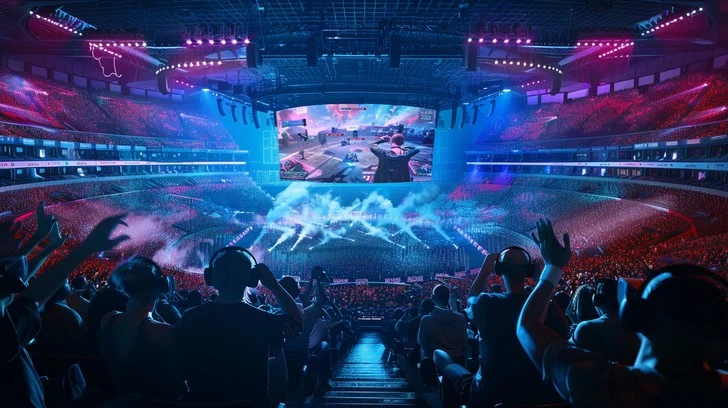
While the West focuses on PC and Console, Mobile Gaming is the dominant force in Asia and Latin America. Titles like PUBG Mobile, Mobile Legends, and Free Fire generate viewership numbers that often dwarf their PC counterparts. Future roadmaps for global franchises are increasingly integrating mobile tournaments into their main ecosystems. We are seeing a convergence where Gaming Tech in smartphones—now featuring ray tracing and 120Hz screens—allows for a competitive experience that rivals handheld consoles.
The Role of Indie and Fighting Games
The Fighting Game Community (FGC) has always operated differently, often relying on grassroots passion. However, with Street Fighter 6 and upcoming titles, we are seeing the “Esports-ification” of the genre with massive prize pools. Furthermore, Indie Games are finding their niche. Games like Rocket League (which started as an indie project) proved that you don’t need to be a AAA studio to create a top-tier esport. We are seeing increased interest in speedrunning communities and niche competitive games, often fueled by Retro Gaming and Game Emulation enthusiasts.
Strategic Considerations for 2026
- Game Lifecycles: Developers must manage the delicate balance of updating a game to keep it fresh without alienating pros who have spent thousands of hours mastering specific mechanics.
- Cross-Platform Play: With Xbox News and PlayStation News pushing for cross-play, esports leagues must decide how to handle input methods (Controller vs. Keyboard/Mouse). Most top-tier competitive shooters remain input-segregated to maintain integrity.
- Health and Wellness: As the industry matures, Gaming Chairs and ergonomic setups are just the baseline. Teams are investing in physical therapists and sports psychologists to combat burnout and wrist injuries.
Conclusion: The Path Forward
The trajectory of Esports News heading into 2026 is one of professionalization and stabilization. The days of uncertainty are being replaced by detailed roadmaps that offer security to investors, organizations, and players. By harmonizing Game Design with competitive integrity, standardizing Gaming Hardware requirements, and implementing sustainable economic models like revenue sharing, the industry is building a foundation that can last for decades.
For the consumer, this means a better viewing experience, higher quality matches, and a deeper connection to the teams they support. Whether you are a fan of MMORPG News, a hardcore FPS Games competitor, or a casual viewer of Minecraft News events, the industrialization of esports ensures that competitive gaming will remain a dominant pillar of global entertainment culture. The roadmap is set; the new era has begun.